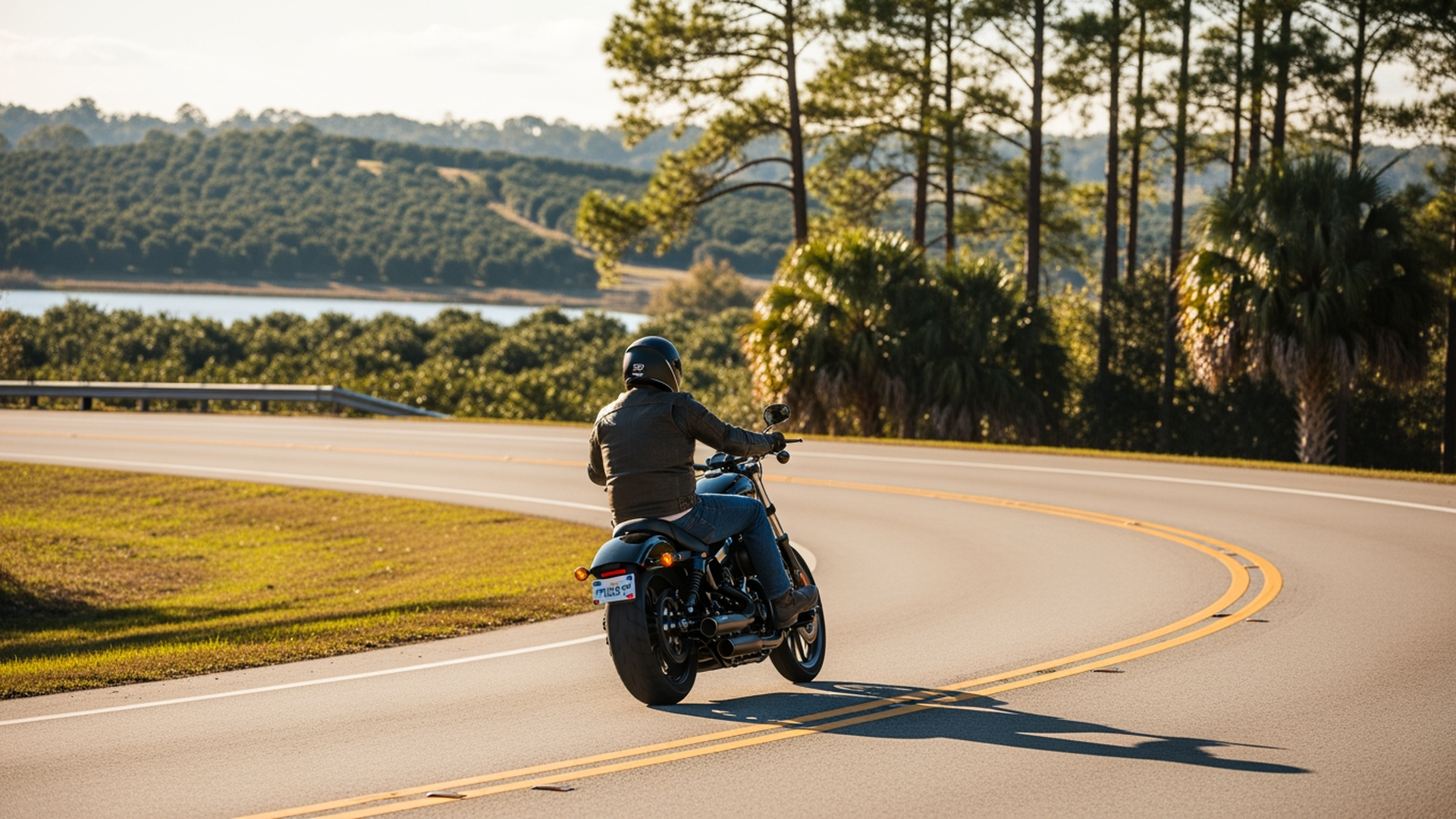
Best Motorcycle Rides Near Orlando (and Their Hidden Risks)
Orlando is flat, hot, and famous for its theme parks, so newcomers assume there is nothing to ride. They are wrong. Within an hour of downtown you can find real hills, live-oak backroads, spring-fed forest loops, and a straight shot to the Atlantic. The same roads that make Central Florida better riding than it looks also carry risks that catch too many riders off guard, and Florida law adds a twist most people never think about until they are already hurt.
Sugarloaf Mountain and the Clermont Hills
Point the bike west toward Clermont and Florida stops being flat. Sugarloaf Mountain is one of the highest points on the peninsula, and the Sugarloaf Mountain Scenic Byway rolls through genuine climbs, dips, and curves that feel imported from another state. Wind past the orange groves and the chain of Clermont lakes and you have some of the best pure riding within an hour of downtown Orlando. The catch is that these are narrow, hilly two-lane roads with blind crests and tight bends, and they draw cyclists, training triathletes, and weekend drivers in equal measure. Sand and grove debris wash across the pavement, and a car cresting a hill has no time to react to a bike stopped or slowed in the road. Ride it smooth and leave room, because you cannot see what is waiting over the next rise.
Mount Dora and the Lake County Backroads
North of Orlando, Mount Dora sits above a chain of lakes with a walkable old downtown that makes a perfect turnaround. Getting there is the reward: the Lake County backroads wind through canopy roads, rolling citrus country, and small towns like Tavares and Eustis, trading the interstate for two-lane blacktop shaded by live oaks. It is the classic Central Florida day ride. The hazards are quiet ones. These are working county roads with driveways, tractors and equipment pulling out, and gravel or mud tracked onto the pavement. Tourist traffic clogs Mount Dora on weekends, and drivers hunting for a parking spot or a lake view are not looking for a motorcycle. Ride it like a car could pull out of any driveway, because one often does.
The Wekiva and Rock Springs Loop
When you want shade and spring water instead of open sun, run the loop through the Wekiva basin northwest of Orlando, out toward Rock Springs and Kelly Park and around through Sorrento and Mount Plymouth. The roads thread through dense forest and along the Wekiva River, cool and green even at midday, some of the prettiest riding close to town. The danger is exactly what makes it beautiful. The canopy keeps the pavement damp and shaded, sand collects on the shoulders and in the curves, and this is thick wildlife country where deer, turtles, and even bears step into the road without warning, especially at dawn and dusk. Add weekend park traffic funneling in and out of narrow entrances and you have a road that rewards a patient throttle.
The 528 Beachline to Cocoa Beach and the Space Coast
When you want salt air, the 528 Beachline runs straight east from Orlando to the Atlantic, dropping you at Cocoa Beach and the Space Coast with Port Canaveral and the Kennedy Space Center along the way. It is the fastest way to trade theme parks for surf, and A1A along the coast opens up miles of open ocean riding once you get there. It is a bucket-list day. It is also a high-speed toll expressway packed with rushed tourists, rental cars, and drivers watching the rocket-launch sky instead of the road. Sudden afternoon thunderstorms build fast over the coast, cross winds hit hard on the open causeways, and cross traffic and turning cars along A1A, not curves, are what take riders down out here.
A St. Johns River Run
For a slower, prettier day, follow the St. Johns River country east and north of Orlando, out through Christmas, Geneva, and the ranch land toward the river and Lake Harney. Wide-open two-lane roads cut through cattle pasture, palm hammocks, and old Florida that most tourists never see, trading speed for scenery and space. The hazards here are the rural kind. Long straight roads tempt speed, wildlife and loose livestock cross without warning, and cross traffic at unmarked intersections comes fast because sightlines are long and drivers assume the road is empty. Fog settles over the river bottoms at dawn, and help is a long way off if something goes wrong. Ride it relaxed but alert, because the emptiness is the risk.
The Hidden Risks Every Orlando Ride Shares
No matter which route you pick, Central Florida riding comes with a few constants worth planning around. Ride like the road is not looking out for you, because it is not.
- ✓ Afternoon thunderstorms. Central Florida storms build fast and drop heavy rain that floods roads and cuts visibility in minutes, which is why fall and winter dry season is prime riding time.
- ✓ Tourist and rental-car traffic. Around the theme parks, I-4, and International Drive, the roads are full of out-of-town drivers who do not know where they are going and are not watching for a bike.
- ✓ Sand, love bugs, and debris. Loose sand in curves, seasonal love-bug swarms that coat a visor, and grove and construction debris all cut traction and vision when you least expect it.
- ✓ The left-turn driver. The most common motorcycle crash is a car turning left across a rider's path, and it happens at Orlando intersections every day.
- ✓ I-4 congestion. Constant congestion and construction on I-4, the 408, the 417, and the 528 leave drivers rushed, distracted, and blind to a bike in the next lane.
Why a Florida Crash Hits Riders Differently
Here is the part most riders never see coming until it is too late. Florida is a no-fault, PIP state, but PIP does not cover motorcycles, so an injured rider gets no PIP for their own medical bills after a wreck and must rely on health coverage, uninsured and underinsured motorist coverage, and the liability claim. That alone makes strong health coverage and solid UM/UIM a Central Florida rider's real backstop. On top of that, Florida follows modified comparative negligence with a 51 percent bar since the 2023 reforms: your recovery is reduced by your share of fault, and if you are found more than 50 percent at fault, you recover nothing, which is exactly why adjusters work so hard to blame the rider. Florida also does not require ordinary drivers to carry any bodily injury liability coverage, so a huge share of drivers can hurt you with no coverage to pay for it. And riders 21 and older may legally ride without a helmet only if they carry at least 10,000 dollars in medical benefits coverage, while riders under 21 must always wear a DOT helmet. It is worth checking your policy and your gear before your next ride, not after a crash. And if you do go down, Florida generally gives you two years from the date of the crash to file an injury claim.
Moe DeWitt and the motorcycle accident lawyers in Orlando at DeWitt Law Firm represent riders hurt by negligent drivers. If you have questions after a crash, their team is here to help.