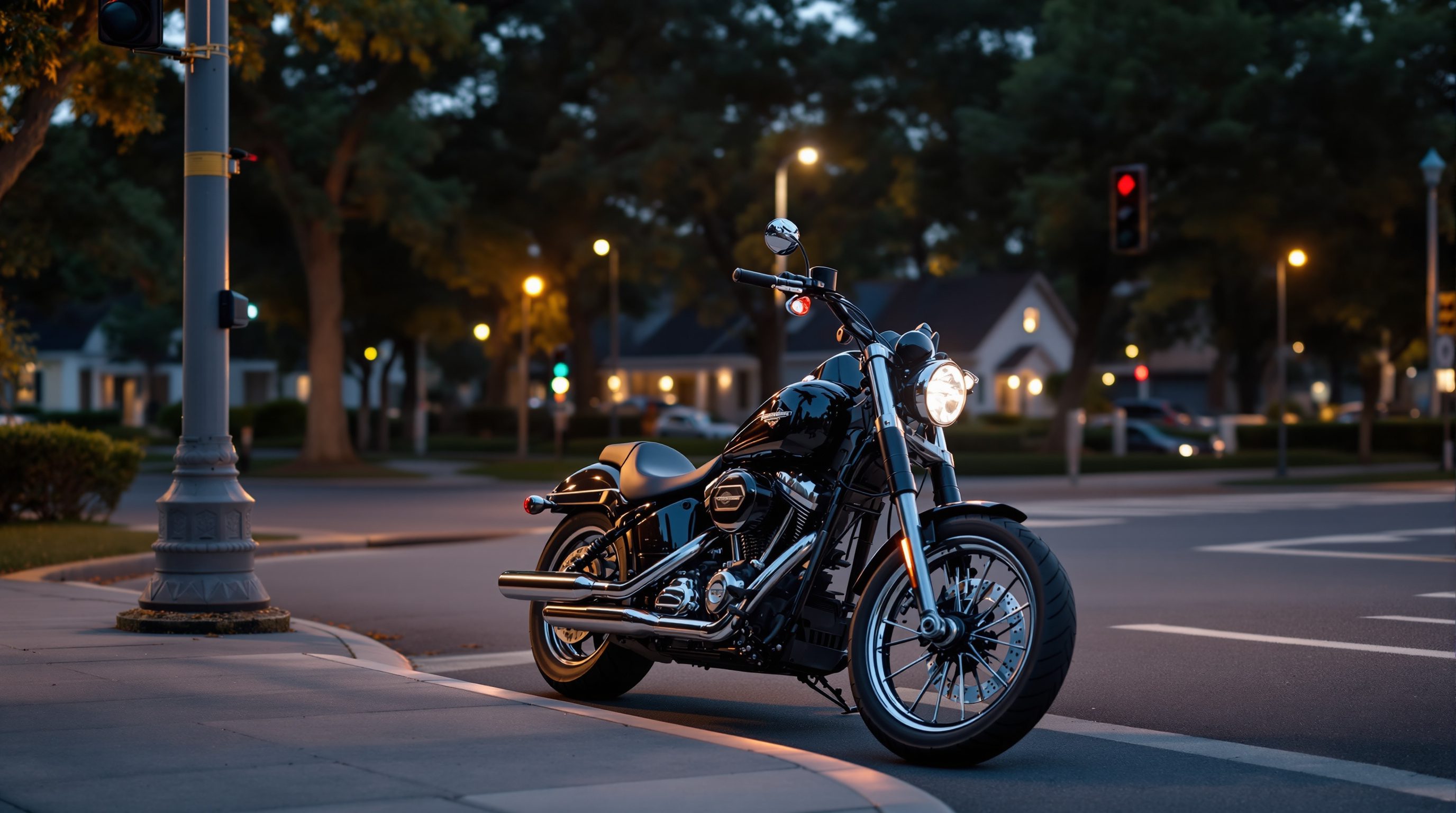
Left-Turn and Intersection Crashes in Orlando: Proving the Other Driver's Fault
It is the crash every rider dreads and almost no rider can avoid. You are going straight through an intersection with the green, and a car coming the other way turns left directly across your path. On Colonial Drive, along the surface streets that feed the 408, or at any of Orlando's busy signalized crossings, the left-turning car is one of the most dangerous things a motorcyclist faces. You have a fraction of a second to react, and the physics are not on your side.
Why the Left-Turn Crash Is So Common and So Serious
The left-turn collision is a classic for a reason. A driver waiting to turn scans for gaps in traffic, and a motorcycle is narrow, easy to lose against a cluttered background, and harder to judge for speed than a car. The driver sees an opening that is not really there and commits the turn. By the time they realize a bike is in the gap, the rider is already on top of them. Nationally, in fatal two-vehicle crashes involving a motorcycle, the other vehicle is turning left while the motorcycle goes straight in a large share of cases, one of the single most common deadly patterns for riders. In a car-versus-car version of the same mistake, everyone usually walks away. When the vehicle going straight is a motorcycle, the rider takes the full force with nothing around them, which is why Orlando intersection crashes so often produce serious injuries.
Why Drivers Say "I Never Saw Him"
Almost every left-turn rider will hear the same words at the scene: "I never saw him." It sounds like an excuse, and to the driver it may even feel like a defense. Legally, it is closer to an admission. A driver turning left is required to yield to oncoming traffic close enough to be a hazard. Saying you did not see a motorcycle that was lawfully approaching in its own lane does not erase the duty to yield. It usually confirms the driver failed to look carefully enough before turning across traffic. "I never saw him" is not a get-out-of-fault card. It is often the clearest sign the driver violated the right of way you already had.
Proving Failure to Yield
The rider almost always has the legal high ground in a left-turn crash, but insurers still fight, so the case comes down to evidence. The goal is to lock in what happened before memories fade and stories shift.
- ✓ Traffic and business camera footage. Orlando intersections, nearby businesses, and doorbell cameras often capture the turn, and this footage can be lost within days.
- ✓ Independent witnesses. Drivers and pedestrians who saw the car cut across your lane carry real weight because they have no stake in the outcome.
- ✓ The Florida crash report. The responding officer's diagram, statements, and any citation for failure to yield become important support for your claim.
- ✓ Physical evidence and damage patterns. Skid marks, debris fields, rest positions, and where each vehicle was struck help reconstruct the geometry of the turn.
- ✓ Your own account, recorded early. Write down what you saw, the light color, your speed, and your lane while it is fresh, because the other driver's version will keep evolving.
Colonial Drive, the 408, and Orlando's Intersection Problem
Central Florida is built around fast surface arterials and expressway ramps, and that layout concentrates left-turn risk. Colonial Drive, State Road 50, is a wide, high-volume corridor with turn lanes at nearly every block, exactly the setup where a driver misjudges a gap and turns across a rider. The surface intersections feeding the 408 East-West Expressway mix commuters accelerating toward the ramps with cross traffic and left-turners, a recipe for the sudden failure-to-yield turn. Add heavy tourist traffic from drivers unfamiliar with the roads, seasonal congestion, and blinding afternoon sun angles, and Orlando's intersections stay near the top of the list for serious motorcycle crashes.
The 51 Percent Bar and How Insurers Try to Shift Blame
Since the 2023 reforms, Florida uses modified comparative negligence with a 51 percent bar. Your recovery is reduced by your share of fault, and if the insurer can push your share past 50 percent, you recover nothing. That rule gives the other driver's insurer a powerful incentive to move as much blame onto the rider as possible, even in a textbook left-turn crash. Expect the familiar playbook. They will claim you were speeding, that you could have stopped, that you were filtering, or that your headlight was off, each argument aimed at nudging your percentage upward so they can cut or deny the claim. This is exactly why the camera footage, the witnesses, and the physical evidence matter so much. Proving the driver turned across your right of way is only half the job. The other half is defending your own conduct so the insurer cannot shave your recovery with a fault-shifting story.
Moe DeWitt and the motorcycle accident lawyers in Orlando at DeWitt Law Firm represent riders hurt by negligent drivers. If you have questions after a crash, their team is here to help.