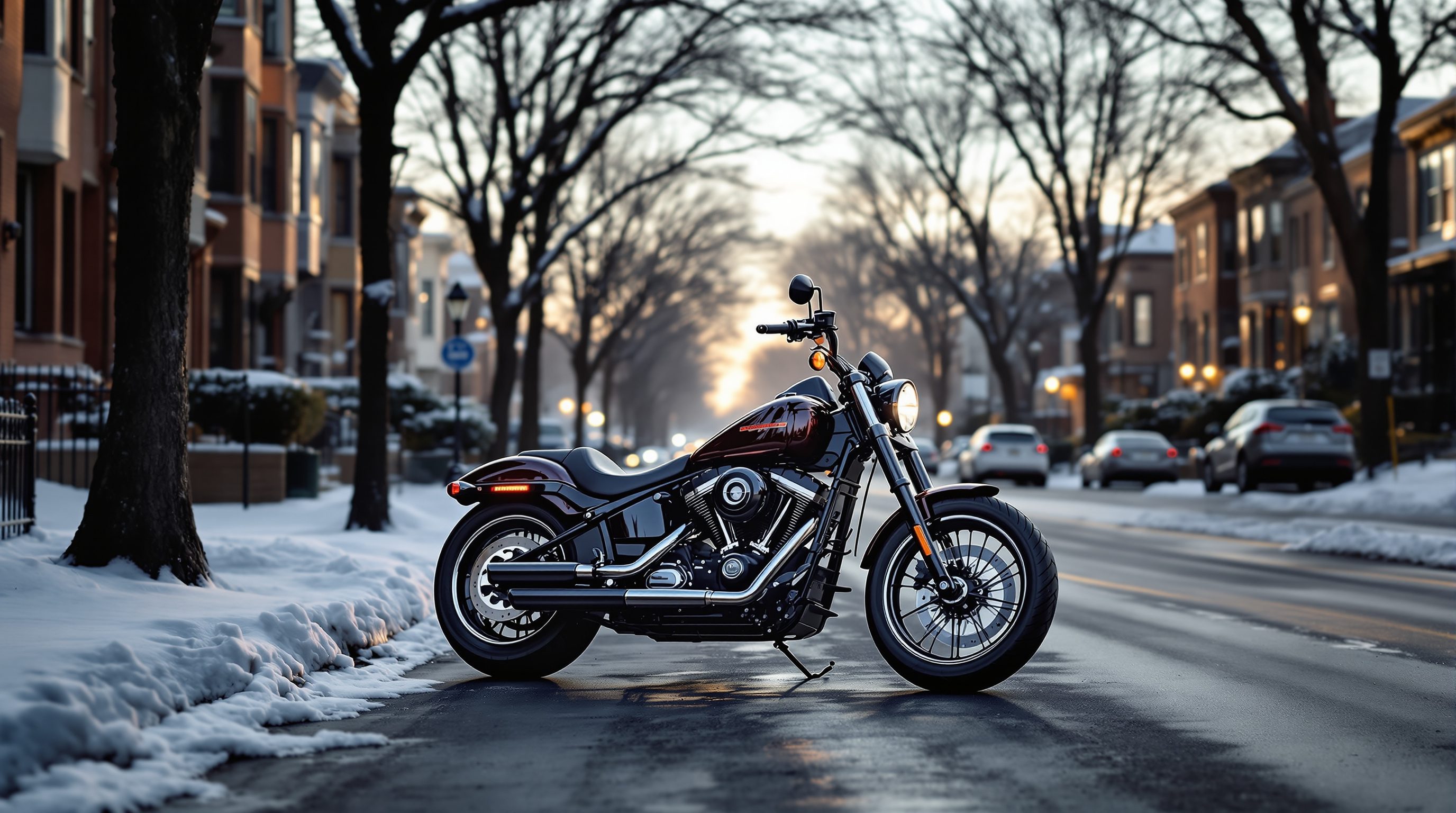
Winter Storage and Your Motorcycle Insurance in Illinois: Should You Drop Coverage?
The salt trucks are out on the Kennedy, the tank has frost on it most mornings, and your bike is parked until spring. So every November the same question hits: why keep paying to insure a motorcycle you are not riding for five months? Cutting coverage can save real money, but "drop it all" and "keep everything" are not your only two choices, and the wrong move here can leave you paying out of pocket for a stolen bike or staring at a higher premium in April.
What Your Bike Still Faces While It Sits
A parked motorcycle is not a safe motorcycle. It just faces different risks than a moving one. Over a Chicago winter your bike can be stolen out of a garage, damaged in a break-in, crushed by a fallen tree limb, soaked by a burst pipe overhead, or lost in a garage fire. None of that has anything to do with riding, and none of it cares that the keys are in a drawer.
The coverage that pays for all of it is comprehensive, often called comp. It handles theft, fire, vandalism, falling objects, and weather damage while the bike is stored. Comprehensive is usually the cheapest part of your policy, and it is exactly the part riders are tempted to cut to save money. Dropping it is how a stolen bike becomes a total loss you eat yourself.
Liability Is the Part You Can Usually Pause
Liability coverage pays for damage and injuries you cause to other people. If the bike is truly parked and never turning a wheel, you are not going to cause a crash, so paying full liability all winter can feel wasteful. Many Illinois riders switch to a storage or lay-up policy: you drop or reduce liability for the off-season while keeping comprehensive in place. You stop paying for a risk that is not happening and keep paying for the risk that is.
One caution. Parked all winter has to actually be true. If you sneak the bike out on a 55-degree December afternoon while your liability is suspended and something goes wrong, you can be riding uninsured, and Illinois requires liability coverage the moment you are on a public road (625 ILCS 5/7-203). Do not lay up a policy you plan to cheat on.
If You Have a Loan, Read Your Contract First
If you are still making payments, this decision may not be entirely yours. Lienholders almost always require comprehensive and collision for as long as the loan is open, specifically to protect their collateral against the same winter risks above. Cancel coverage the bank requires and the lender can buy expensive force-placed insurance on your behalf, you can breach the loan terms, and if the bike is stolen or burns while uninsured you still owe every dollar on a motorcycle you no longer have. Pull up your loan paperwork and confirm what you are required to carry before you touch anything.
The Gaps That Quietly Wreck a Spring Claim
The real danger of dropping coverage is not just the winter months. It is what a lapse does to you later. A gap in coverage tells insurers you were not continuously insured, and continuous coverage is something they reward with lower rates. Adjusters diminish, devalue, and deny for a living, and a messy coverage timeline is an opening you do not want to hand them if you get hit in April.
- ✓ Keep comprehensive. It is the coverage that pays for theft, fire, and weather damage while the bike is stored, and it is usually cheap.
- ✓ Reduce or suspend liability, not comp. A storage or lay-up policy drops the risk that is not happening while keeping the one that is.
- ✓ Confirm lienholder requirements. A financed bike almost always must carry full coverage until the loan is paid.
- ✓ Protect your UM and UIM. Illinois requires UM on an active policy and it cannot be waived, so do not cancel yourself out of it by accident.
- ✓ Do not create a lapse. A coverage gap can raise your spring rate and hand an adjuster a reason to fight your claim.
So, Should You Drop It?
Do not drop everything. For most Illinois riders the right winter move is to keep comprehensive, reduce or suspend liability with a storage option if the bike is genuinely not being ridden, confirm lienholder requirements on a financed bike, and avoid any coverage lapse that follows you into spring. Talk it through with your agent about your specific bike, your budget, and where you store it. Just do not cancel on autopilot.

Derek Martin and the Chicago motorcycle injury attorneys at DDT Injury Team represent riders hurt by negligent drivers. If you have questions after a crash, their team is here to help.