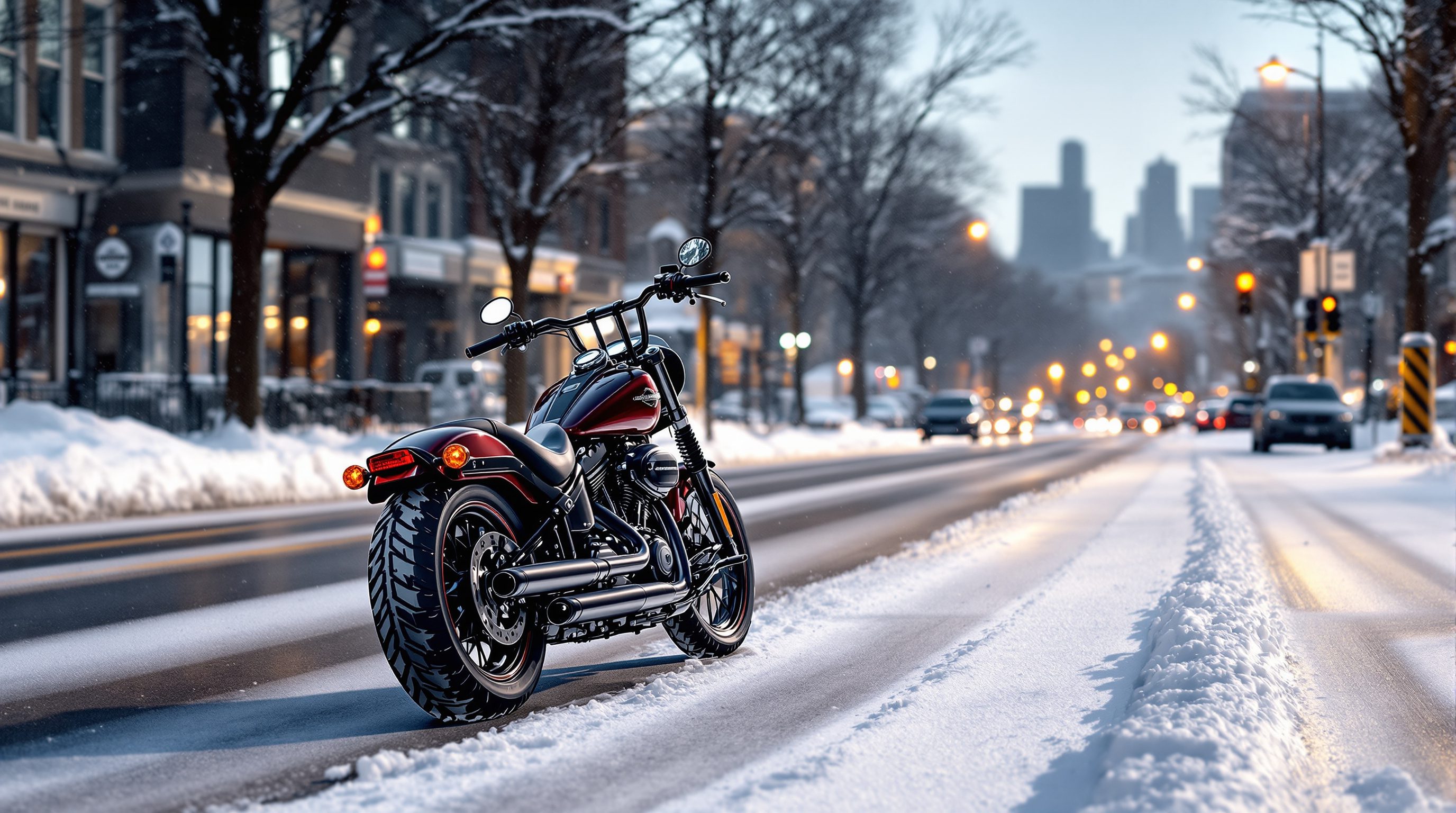
Snow, Ice, and Fault: How Winter Weather Affects an Illinois Motorcycle Claim
You get hit on a slushy stretch of the Eisenhower, or a car slides through a red light on Milwaukee Avenue and clips you, and the first words out of the other driver's mouth are always the same: "It was the ice, there was nothing I could do." Their insurer will say it too. But in Illinois, a driver's duty to operate safely does not disappear when the roads get bad. Snow and ice change how a crash is judged. They do not hand the other driver a free pass.
The "Act of God" Defense and Why It Rarely Wins
The formal name for the "it was the weather" argument is the act of God defense: the claim that a natural event was so completely the cause that no human fault is involved. Here is the problem for the driver who hit you. An act of God has to be the sole cause of the harm, and snow in a Chicago January is not a surprise. It is forecast days out, and every driver is expected to adjust. The moment human choices contribute, whether that is driving too fast for conditions, following too close, or failing to clear a windshield, the defense collapses. A snowstorm does not cause a rear-end collision. A driver who did not slow down for the snow causes it.
Drivers Still Owe a Duty of Care in Bad Weather
Every Illinois driver has a legal duty to operate with reasonable care for the conditions, and worse conditions raise that standard, they do not lower it. What counts as safe on a dry July afternoon is reckless in a February whiteout.
- ✓ Reasonable care is measured against the conditions. Snow means a driver is expected to do more, not less.
- ✓ Too fast for conditions is its own violation. Drivers must reduce speed for weather regardless of the posted limit. Going the speed limit on ice can still be negligent.
- ✓ Basic duties do not pause for snow. Clearing windows, safe following distance, headlights, and stopping for signals all still apply.
- ✓ Riding in winter is not fault by itself. Illinois has no helmet law and no rule against cold-weather riding, so being on two wheels is not negligence.
Comparative Negligence and Black Ice
Illinois uses a modified comparative negligence rule. You can recover as long as you are not more than 50 percent at fault, but your recovery drops by whatever blame is assigned to you, so expect the other side to argue a motorcycle should not have been out at all or that you were going too fast. Push that framing back where it belongs, because every point is money. Black ice matters too: if you go down alone with no other vehicle, there may be no driver to claim against, though your own coverage or a poorly maintained public road can come into play. When another driver is involved, ice explains why a car slid, not why the driver was speeding or tailgating in a position to slide into you.
Proving the Other Driver Was Negligent Despite the Conditions
Winter crashes come down to evidence, and evidence disappears fast when snow gets plowed and melts, so the sooner the case gets built the stronger it is. The police report and any citation carry real weight on speed, distance, and conduct. Photos and video of vehicle positions, slide marks, the road surface, and the signals matter, and nearby business or traffic-camera footage can be overwritten within days. Witnesses who saw the other driver blow a light or fishtail at speed sink the weather excuse, and vehicle damage plus event data on newer cars can reconstruct a speed that contradicts the "nothing I could do" story. The weather is never the whole story. A driver's choices inside that weather are what create fault.

Derek Martin and the motorcycle accident lawyers in Chicago at DDT Injury Team represent riders hurt by negligent drivers. If you have questions after a crash, their team is here to help.