Road Salt and Winter Corrosion: Maintenance That Keeps You Upright
If you ride through a Chicago winter, or you sneak the bike out on that one freak 45-degree day in January, the enemy is not just the cold. It is the salt. The city and the counties dump it by the truckload on the Kennedy, the Dan Ryan, and every side street in Cook, Lake, DuPage, and Kane. That white brine is engineered to cling to the road, and it clings to your bike the same way, eating at the exact parts you count on to stop and steer.
Why Winter Brine Is So Hard on a Motorcycle
Cities pre-treat the roads with liquid brine so the salt sticks and works in lower temperatures. A motorcycle is worse off than a car because your brakes, chain, bearings, wiring, and fasteners are all out in the open with no fender wells or underbody panels shielding them. Salt spray gets thrown straight up into every exposed part, and with the moisture from slush you have the perfect recipe for oxidation: salt, water, and bare metal. The result is not just surface ugliness. It is function loss in the components that keep you upright.
The Parts Salt Attacks First
Not everything corrodes at the same rate. These are the systems that fail first and matter most, so this is where your attention and your rinse water should go.
- ✓ Brakes. Salt pits rotors, seizes caliper pistons, and corrodes brake lines from the outside in. A caliper that drags or a line that weakens is a stopping-distance problem you feel too late.
- ✓ Chain and sprockets. Salt strips lubricant and rusts the rollers. A dry, rusted chain wears fast, runs rough, and in a worst case can bind under load.
- ✓ Electrical grounds. Corroded connectors cause flickering lights and dead signals. A brake light that quits in traffic is a safety issue, not just an annoyance.
- ✓ Bearings and fasteners. Salt works into wheel bearings and threads. Seized or weakened suspension and axle fasteners are the kind of failure nobody sees coming.
How Corrosion Turns Into a Crash and a Blame Fight
A neglected, salt-eaten bike does not just cost you money at the shop. A seized caliper can pull the bike under braking, a corroded brake line can leave you with a dead lever, and a corroded ground can kill your brake light so the driver behind you never sees you slow. Any one can trigger a crash that was never really your fault. Here is the Illinois wrinkle: under the state's comparative negligence rule an insurer will hunt for a known, ignored maintenance defect to shift blame onto you. You can still recover as long as you are not more than 50 percent at fault, but every point they pin on you comes out of your recovery. A sound bike protects your claim.
Wash the Brine Off and Check Before You Ride
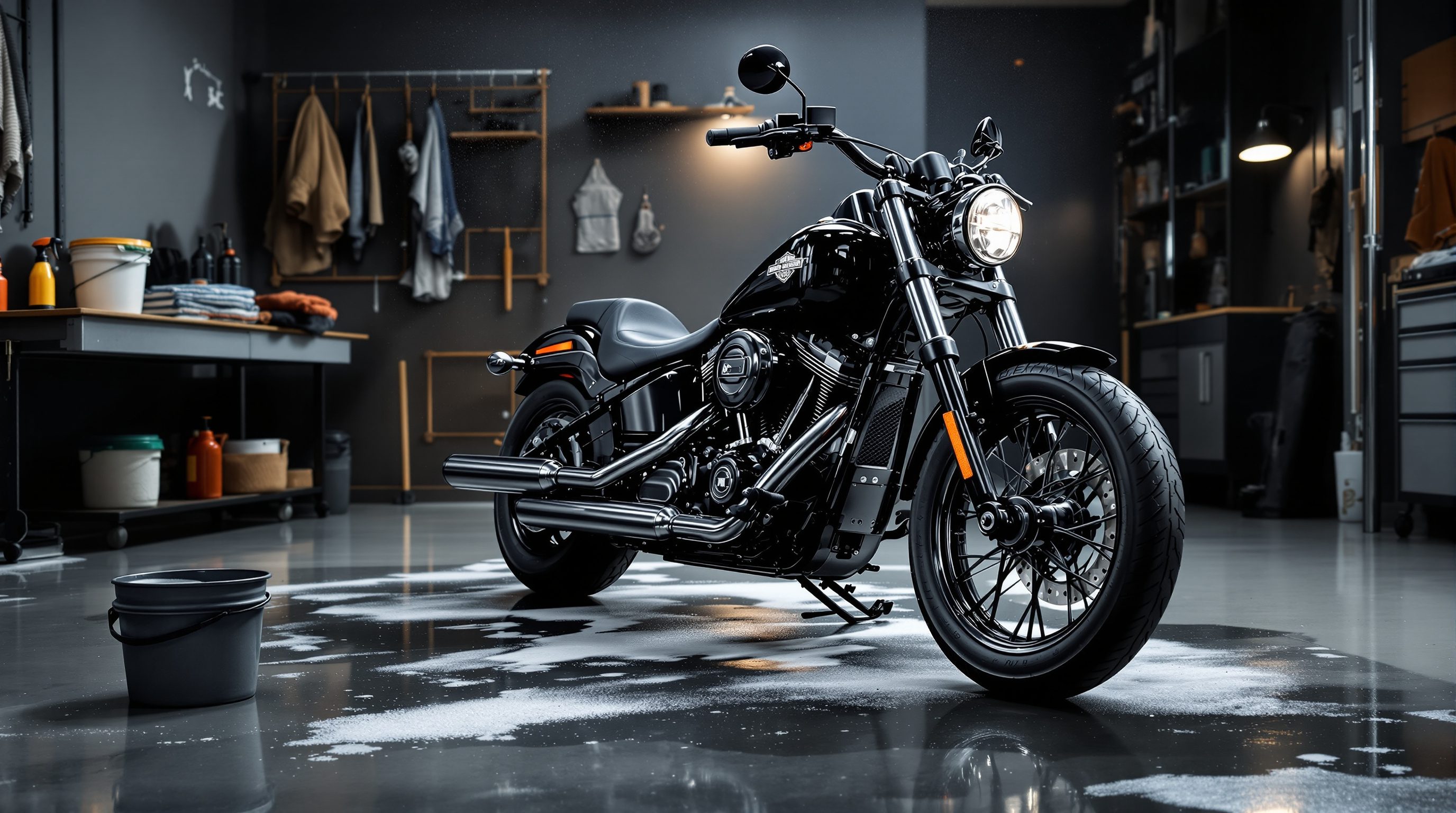
The single most effective habit is the simplest: rinse the salt off before it sits, because brine left overnight keeps corroding in your garage long after the ride is over. Use a gentle low-pressure rinse with plain water rather than a pressure wand that drives salt deeper into seals, dry the bike fully, and re-lube the chain every time you wash it. Then, before each cold-weather ride, squeeze both brakes for a firm lever, look at the lines and rotors for green or flaky buildup, run your eye down the chain for rust and tight spots, and test every light including the brake light. If something looks wrong, do not talk yourself into "it will hold." Corroded parts do not heal.

Have questions after a wreck? Derek Martin and the Chicago motorcycle injury attorneys at DDT Injury Team (driverdefenseteam.com) review rider claims and explain your options.