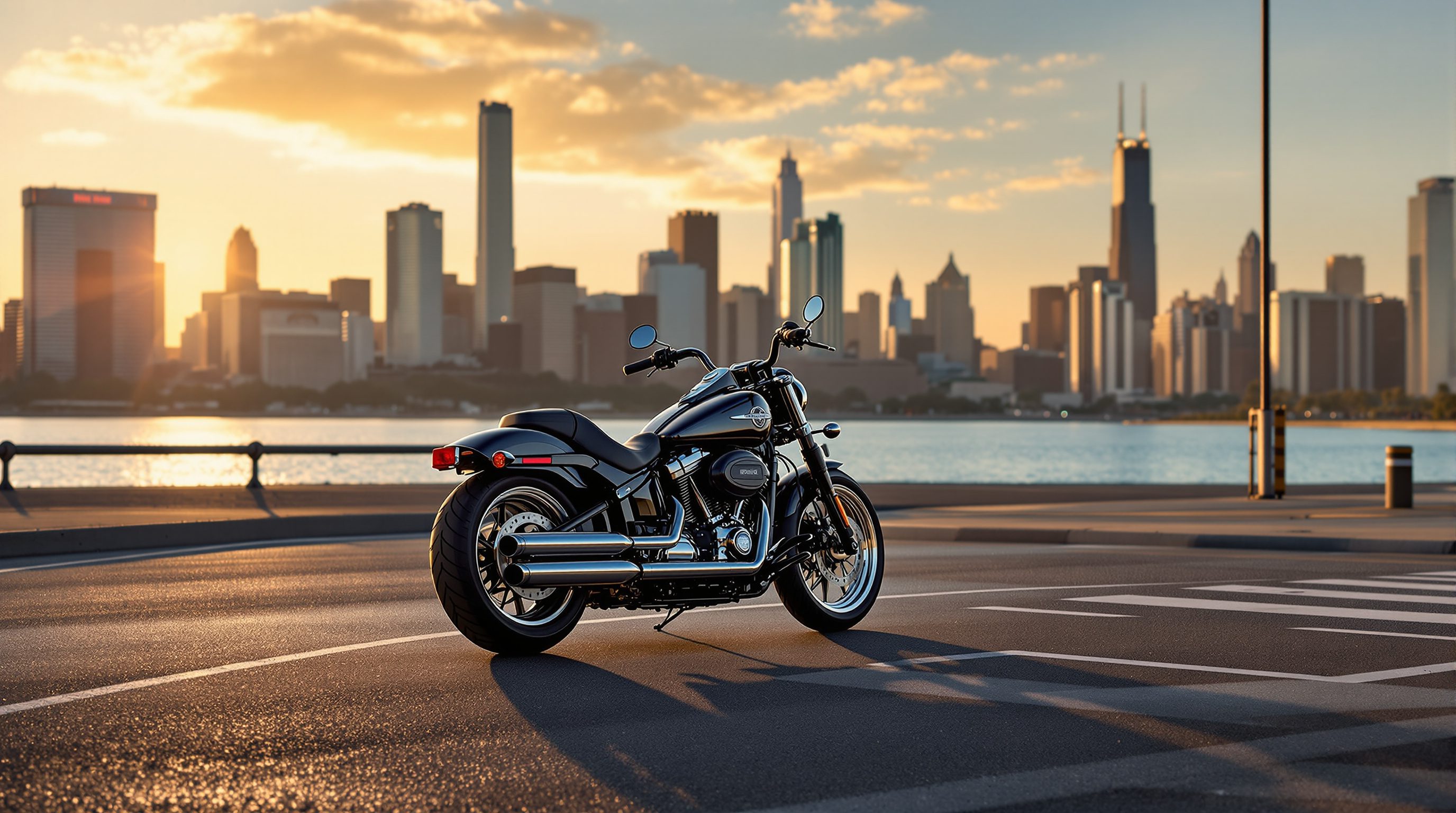
New Year Insurance Checkup: Coverage Every Chicago Rider Should Carry in 2027
The bike is in the garage, the Dan Ryan is a mess of salt and slush, and you have a few quiet months before the first warm Saturday pulls you back onto DuSable Lake Shore Drive. That downtime is the best gift a Chicago rider can give their future self: a real look at the insurance policy you never read. Most riders buy coverage once, pick the cheapest number, and never touch it again, right up until a driver on the Eisenhower turns them into a claim.
Why the Illinois Minimum Leaves You Exposed
Illinois requires drivers to carry just 25/50/20: $25,000 in bodily injury per person, $50,000 per crash, and $20,000 for property damage (625 ILCS 5/7-203). That floor was not designed with a motorcyclist in mind. A rider takes the full force of a crash with no cage, no airbags, and no crumple zones, and a single ambulance ride, ER visit, and surgery can blow past $25,000 before physical therapy or a missed paycheck. If the driver who hit you carries only the minimum, that thin policy is the ceiling on what their insurance will ever pay, and plenty of drivers on Chicago roads carry no valid policy at all.
Raise UM/UIM Above the 25/50 Floor
If you change one thing this winter, make it this. Uninsured and underinsured motorist coverage is your own policy stepping in when the at-fault driver had no insurance, too little, or fled the scene. In Illinois, UM coverage is required and cannot be waived, and UIM is required once you buy UM limits above the state minimum (625 ILCS 5/7-203; 215 ILCS 5/143a). The catch is that most riders leave UM/UIM at the 25/50 floor, which recreates the very gap the other driver's thin policy would.
- ✓ Target 100/300 UM/UIM. That is $100,000 per person and $300,000 per crash, so your backstop reflects what a real motorcycle injury costs.
- ✓ Match your liability. Set UM/UIM to the same limit as your liability so your protection for yourself is as strong as what you carry for others.
- ✓ Add MedPay of $5,000 to $10,000. It pays early medical bills regardless of fault, which matters most in the first weeks after a crash.
- ✓ Ask about stacking and an umbrella. Stacking can multiply UM/UIM across vehicles, and an umbrella adds a cheap layer of liability if you own a home or assets.
Illinois Has No Helmet Law, and It Cannot Be Used Against You
One point worth knowing before you ride again. Illinois has no helmet law, and the choice to ride without one cannot be used to blame you for a head injury, so do not let an insurer imply otherwise. That protection is one more reason the fight after a crash is usually about coverage limits, not about second-guessing the rider. MedPay and comprehensive kept in place year round mean you are covered both on the road and while the bike sits out a Chicago winter.
The 15-Minute Winter Review
You do not need an appointment to start. Pull your declarations page, the summary that lists your actual limits, and run the list. Find your UM/UIM number, and if it reads 25/50 that is your signal to raise it. Confirm you carry MedPay of at least $5,000, check that your liability limits match your UM/UIM, and ask your agent about stacking and a lay-up option for the off-season. Fifteen minutes now beats finding out your limits after a driver on Milwaukee Avenue has already made the decision for you.

Derek Martin and the Chicago motorcycle accident attorneys at DDT Injury Team represent riders hurt by negligent drivers. If you have questions after a crash, their team is here to help.