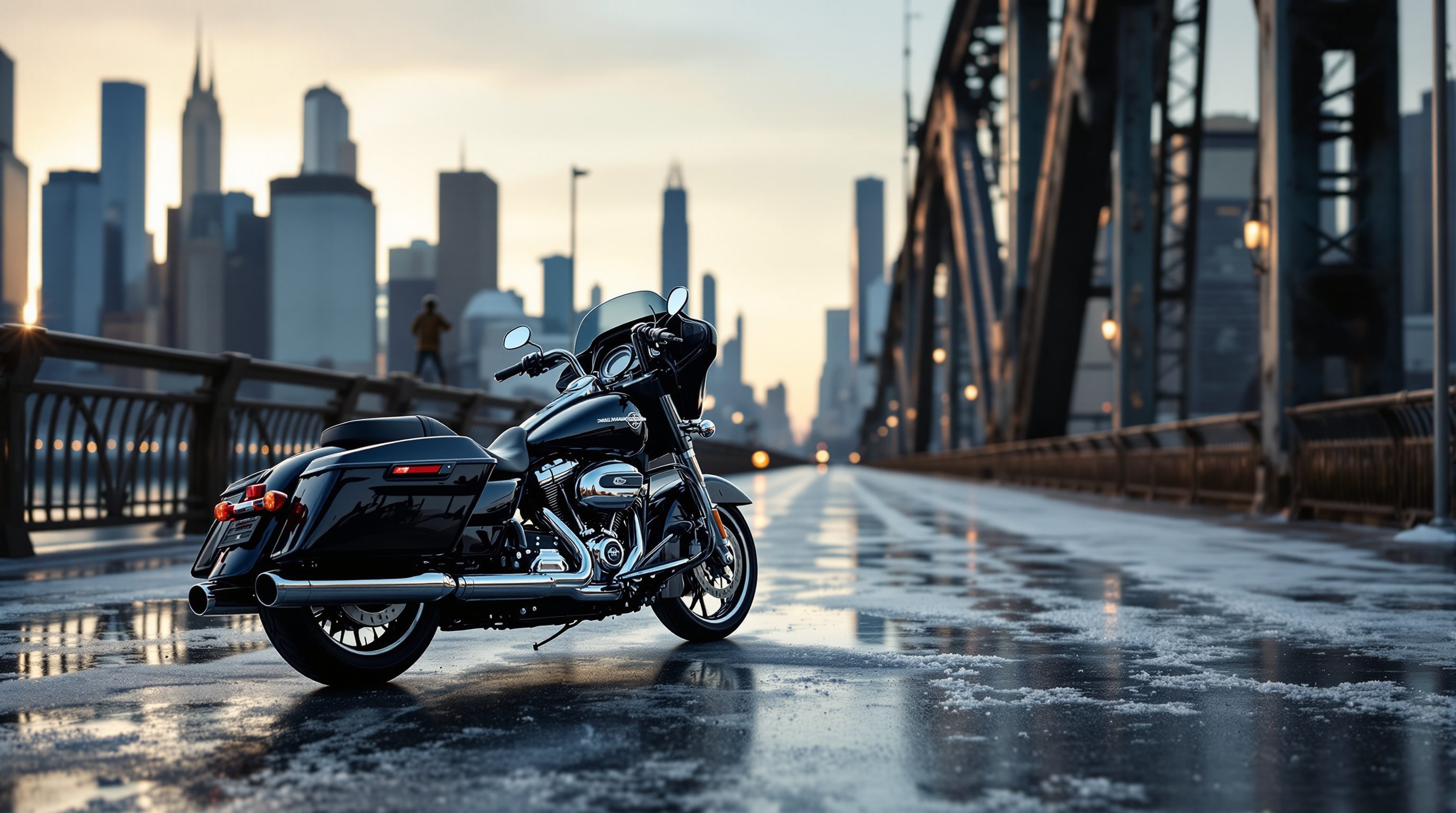
Black Ice and Bridge Decks: Winter Road Hazards Every Chicago Rider Should Know
The scary thing about black ice is that you do not see it. It is not white, it is not obvious, and it is not sitting in the middle of the road announcing itself. It is a thin, clear glaze that lets the dark pavement show right through, so a surface that looks merely wet is actually frozen solid. On four wheels that is a slide. On two wheels it is almost always a crash. Late fall and early winter in Chicago are prime black-ice season, and the danger hides in specific, predictable spots.
Bridge Decks and Overpasses Freeze First
This is the one every rider has to burn into memory. Bridge decks and overpasses freeze before the regular road does, and they stay frozen longer. A normal road has the ground underneath holding warmth. A bridge or overpass has cold air moving above and below it, so it loses heat from both sides and drops to freezing while the pavement on either end is still just wet. Chicago is stitched together with bridges and elevated stretches, over the river, over rail yards, and the ramps and flyovers on the Kennedy, the Dan Ryan, and the Eisenhower. On a morning near freezing you can be rolling on clear pavement, hit a glazed bridge deck, and be down before you understand what changed. When the temperature is anywhere near freezing, treat every bridge, overpass, and ramp as iced until proven otherwise.
The Other Places Black Ice Hides
Bridges are the headline, but they are not the only trap. Black ice forms wherever the surface can drop to freezing and moisture is present. Shaded curves and underpasses stay iced long after sunny pavement has dried. Cold air and water both settle into dips, so the bottom of a hill or an underpass can be iced while the road around it is clear. Melt from a snowbank or a leaking hydrant that trickles across the lane refreezes overnight into a slick you never see. Frost and refrozen melt are worst around dawn, before the sun and traffic work on the road, and painted lines, metal grates, and bridge joints turn deadly with any ice on top.
How to Actually Spot It
You cannot always see black ice, but you can read the conditions that make it. Air near or below freezing plus any moisture is the setup, so glance at your bike's temperature readout before a bridge if it has one. If it is 30 degrees and the road looks wet, ask yourself why it is not frozen, because it may be. Watch other vehicles: spray coming off car tires means liquid water, while no spray on a wet-looking cold road can mean ice. Black ice often looks glossier and darker than plain wet asphalt, so if a patch looks a little too smooth, respect it.
- ✓ Treat every bridge and ramp as iced. Near freezing, decks and overpasses are frozen while the road on either end is only wet.
- ✓ Suspect shade, dips, and dawn. Shaded curves, low hollows, and early mornings hold ice longest.
- ✓ Read the road, not just the sky. Cold, wet-looking pavement with no tire spray is a warning of ice.
- ✓ If you catch ice, make no sudden inputs. Do not brake or accelerate, keep the bars straight, and coast until you reach grip.
- ✓ When ice is likely, park it. Two wheels and ice do not mix, and no skill or gear changes that.
If You Are Caught On It
Sometimes you find the ice under you before you find it with your eyes. The worst thing you can do is panic and grab a handful of brake or chop the throttle, because sudden inputs on ice put you down instantly. Ease off everything and let the bike coast straight, keep the bars straight and your body still, and look where you want to go rather than at the thing you fear. The honest truth is that a bike on real black ice has very little you can do, which is exactly why avoidance beats technique and why the smartest move is often not to be out there when ice is likely.
When a Road Defect or a Driver Is the Real Cause
Not every winter crash is just bad luck on the ice. Sometimes a driver loses control and hits you, and the modified comparative negligence 50% Rule still governs who recovers (735 ILCS 5/2-1116). Sometimes the road itself is the problem, a poorly maintained bridge joint, a drainage defect that dumps water across the lane and freezes, or a pothole hidden under ice. If a city or public body created or ignored a dangerous condition you may have a claim, but claims against an Illinois municipality carry a short fuse: a one-year notice and filing window under the Tort Immunity Act (745 ILCS 10/8-101), far shorter than the usual two-year injury deadline. If a bad road put you down, do not sit on it.

Led by Derek Martin, DDT Injury Team in Chicago fights for injured motorcyclists. Reach out to their Chicago motorcycle accident attorneys anytime you need real answers.