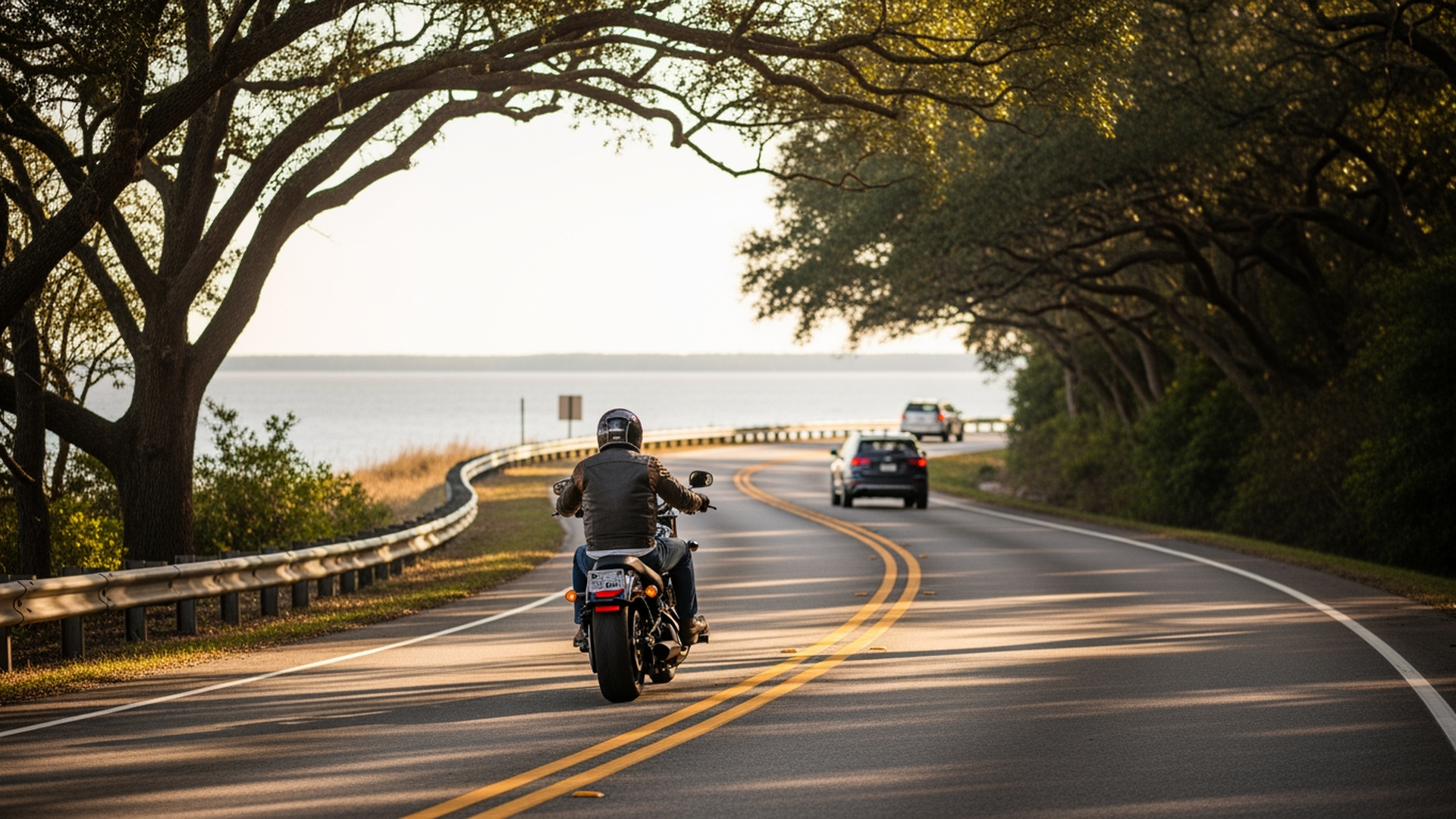
Best Motorcycle Rides Near Pensacola (and Their Hidden Risks)
Pensacola sits at the western tip of the Florida Panhandle with saltwater on three sides and pine forest at its back, and the riding shows it. You can chase the Gulf out to Perdido Key, run the sugar-white shoreline east through Gulf Breeze and Navarre, disappear into the Blackwater River State Forest, or trace the Escambia Bay bluffs on the old Scenic Highway. The same roads that make this corner of Florida a rider's paradise also carry risks that catch people off guard, and Florida law adds a wrinkle most riders never think about until they are already hurt.
US-98 West to Perdido Key and Gulf Islands National Seashore
Point the bike west on US-98 and you are on the classic Pensacola run. The road crosses the bay and carries you out toward Perdido Key, where the Gulf opens up on your left and the Gulf Islands National Seashore keeps the dunes wild and undeveloped. On a clear fall afternoon, with the summer crowds gone and the light going gold over the water, it is hard to beat. The catch is the beach traffic and the surface. Tourists brake hard for parking and beach access, drivers pull out of resort and condo lots without looking, and blowing sand drifts across the pavement in the open stretches near the dunes. Sand on asphalt behaves like ball bearings under a leaned tire, so read the road ahead and give the exposed sections room.
Fort Pickens Road Out to the Fort
For a slower, quieter ride, cross to Pensacola Beach and turn out Fort Pickens Road into the national seashore. The road runs the narrow spit of Santa Rosa Island with the Gulf on one side and the sound on the other, low dunes and sea oats all around, out to the old brick fort at the western end. It is one of the most peaceful rides in the area, but it is exposed in every sense. Wind gusts hit hard on the open island, sand blows across the lane, wildlife crosses without warning, and there is a park entrance fee and a real chance the road closes when a storm pushes water over it. Ride it on a calm day, mind the crosswind, and do not count on services being close.
The Blackwater River State Forest Around Munson and Krul Lake
When you want trees instead of saltwater, head north into the Blackwater River State Forest around Munson and Krul Lake. This is the Panhandle's inland riding: shaded two-lane roads winding through longleaf pine, tea-colored creeks, and some of the best canopy roads in the region. It is a genuine escape from the coast. It is also remote and rough in spots. Fuel and cell service get scarce, pavement narrows and breaks up, sand and pine straw wash into the corners, and log trucks and wildlife share the road. Deer are a real threat here at dawn and dusk. Carry what you need, watch the surface in the tight stuff, and treat every blind curve like something is stopped just past it.
The Scenic Highway on US-90 Above Escambia Bay
Closer to home, the Scenic Highway, the old US-90 that runs the bluffs along the east side of Escambia Bay, is the ride locals reach for when they only have an hour. It rides the high ground above the water past live oaks and long views out over the bay, a short, gorgeous stretch that feels a world away from the interstate right beside it. The hazards here are close-quarters ones. The road is narrow and curving with driveways and side streets feeding in, sightseeing traffic slows and turns for the view, and the tree canopy keeps shaded pavement damp and slick after rain. Wet leaves and fallen acorns collect in the curves in fall. Relaxed scenery does not mean relaxed riding.
The Coastal Run East Through Gulf Breeze and Navarre
For a longer day on the water, cross the Pensacola Bay Bridge to Gulf Breeze and run US-98 east through Navarre, with the option to drop onto Navarre Beach and ride the shoreline. The route strings together bridges, sound views, and open Gulf, one of the prettiest easy days in the area. It is also some of the busiest riding around. The bridges funnel traffic tight with little escape room, drivers cross three lanes for a beach turn, and left-turning cars and cross traffic pulling out of businesses, not curves, are what put riders down out here. Give yourself following distance the bridges do not, and assume the driver waiting to turn does not see you.
The Hidden Risks Every Pensacola Ride Shares
No matter which route you pick, riding the Panhandle comes with a few constants worth planning around. Ride like the road is not looking out for you, because it is not.
- ✓ Blowing sand and wet leaves. Sand drifts across the coastal roads near the dunes and wet leaves and acorns collect in the shaded curves inland, and both tear away grip the instant you lean or brake on top of them.
- ✓ Hurricane season and storm damage. Fall riding here means watching the tropics, and storms leave debris, standing water, and washed-out shoulders on the barrier islands and low coastal roads long after the sky clears.
- ✓ The left-turn driver. The most common motorcycle crash is a car turning left across a rider's path, and it happens at Pensacola, Gulf Breeze, and Navarre intersections every day.
- ✓ Tourist and beach traffic. Drivers watching the Gulf instead of the road brake hard, turn suddenly for parking, and pull out of resort lots without ever looking for a bike.
- ✓ Bridge and interstate congestion. The Pensacola Bay and Bob Sikes bridges, along with I-10 and I-110, leave drivers rushed, boxed in, and blind to a motorcycle in the next lane.
Gear, Helmets, and the Florida Rules
A few Florida basics are worth locking in before your next ride, not after a crash. Florida lets a rider 21 or older ride without a helmet only if they carry at least 10,000 dollars in medical benefits coverage, while every rider under 21 must wear a DOT-approved helmet, no exceptions. That 10,000 dollar figure is a legal minimum, not real protection for a serious injury, and a helmet does far more for you on the pavement than any coverage rule. Beyond the helmet, real gloves, boots, and a proper jacket are what stand between you and road rash when a road that was dry an hour ago is slick with sand or rain. Slow down for the blowing sand near the dunes, give the wet leaves in the shaded curves a wide margin, and remember that the same coastal roads that reward you in the fall turn treacherous the moment a storm rolls through.
Why a Florida Crash Hits Riders Differently
Here is the part most riders never see coming until it is too late. Florida is a no-fault, PIP state, but PIP does not extend to motorcycles, so after a wreck there is no automatic pot of PIP money covering your own early medical bills the way there is for a car driver. That makes your own health insurance and, above all, solid uninsured and underinsured motorist coverage a Panhandle rider's real backstop, especially because Florida does not require ordinary drivers to carry any bodily injury liability coverage at all. The fault rule matters too. Since March 2023 Florida follows modified comparative negligence with a 51 percent bar, so your recovery is reduced by your share of fault and, if you are found more than 50 percent at fault, you recover nothing. Insurers know this and fight hard to shift blame onto the rider, because every percentage point either shrinks or kills the claim, which is why how a crash is documented drives the whole thing. And the clock is short: since 2023 Florida generally gives you just two years from the date of the crash to file an injury claim, down from the old four.

Dana Brooks and the motorcycle accident lawyers in Pensacola at Fasig Brooks represent riders hurt by negligent drivers. If you have questions after a crash, their team is here to help.