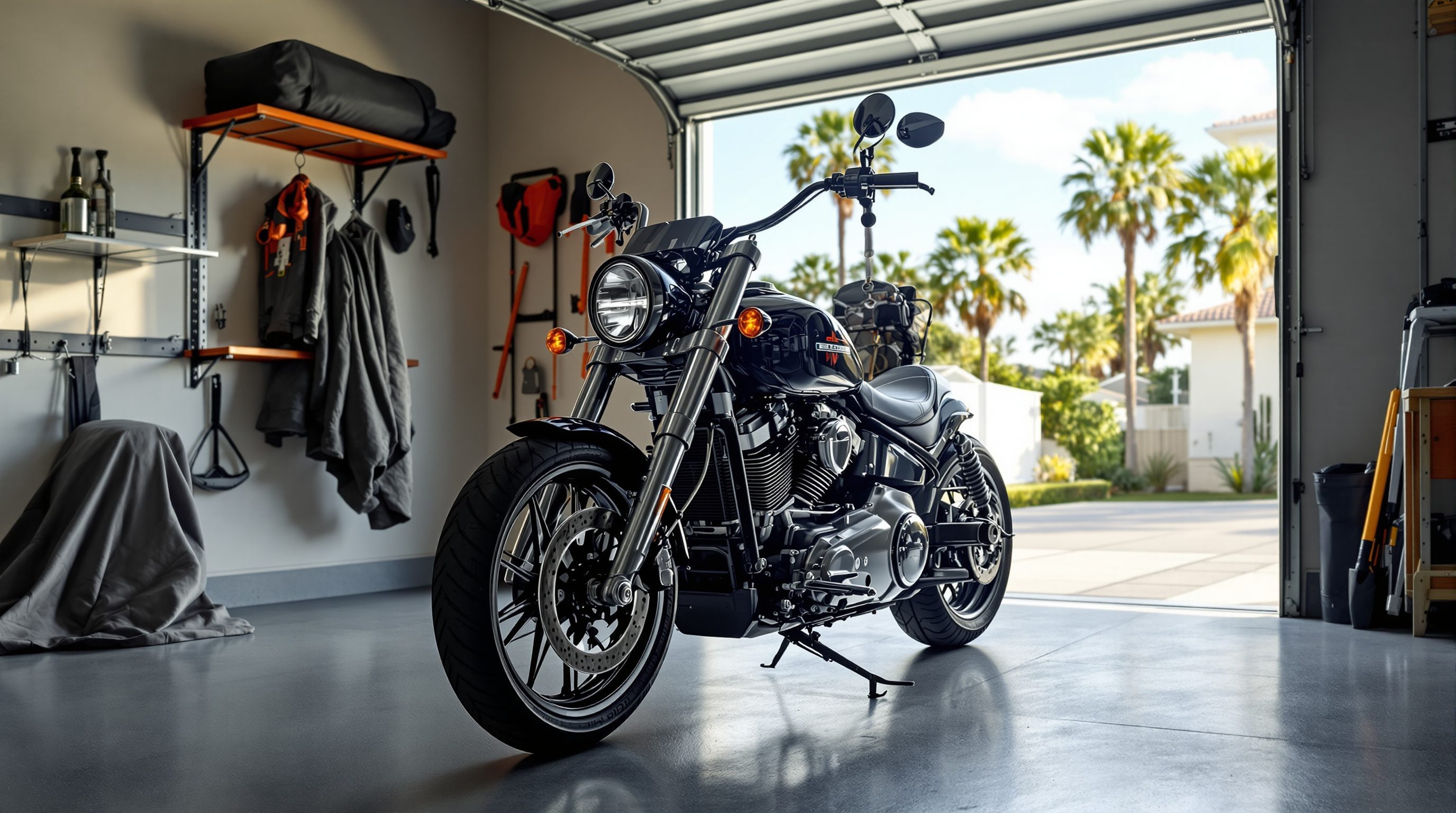
Storing Your Bike for the Winter in Florida? Do Not Drop the Wrong Coverage
On the Gulf Coast most of us ride year-round. Pensacola winters are mild, and plenty of riders never park the bike at all. But when a cold snap rolls through, or you are cleaning up after a rough hurricane season, or life just gets busy, the bike ends up in the garage for a few months. That is fine. What is not fine is calling your insurer, telling them the bike is parked, and letting them talk you into stripping the policy down to nothing to save a few dollars. A parked motorcycle is not a risk-free motorcycle, and a coverage gap you create on purpose can cost you far more than the premium you saved. Here is how to store the bike smart, and which coverage to keep no matter how long it sits.
A stored bike still gets stolen, flooded, and rained on
The mistake riders make is thinking that a bike they are not riding cannot cost them anything. Tell that to the rider whose garage flooded in a fall storm, or whose bike walked off a trailer while it sat under a cover. Theft, fire, a tree through the roof, storm surge, and flood all happen to bikes that never turned a wheel that month. On the Panhandle, where a single tropical system can put water where it has never been, that is not a rare event. It is the reason comprehensive coverage exists.
Comprehensive is the part of your policy that pays for non-crash damage: theft, vandalism, fire, falling objects, flooding, and storm damage. If you are going to trim anything while the bike is stored, this is the last thing you touch, not the first. For a bike sitting still through hurricane cleanup or a wet winter, comprehensive is the most valuable coverage on the policy.
Why dropping liability and UM is the expensive move
Here is where riders get burned. To save money, they cancel the policy or drop it to comprehensive-only, wiping out liability and uninsured/underinsured motorist coverage for the storage months. Then one of two things happens. They roll the bike out on the first warm Saturday before they remember to call the insurer back, and they are riding uninsured. Or the lapse itself becomes a black mark that spikes their rate or costs them a continuous-coverage discount when they reinstate.
That UM/UIM piece matters more in Florida than almost anywhere. Florida does not require ordinary drivers to carry any bodily-injury liability at all. All the state mandates is $10,000 in PIP and $10,000 in property damage, and PIP does not even cover motorcyclists. So when a careless driver hits you, there may be no liability coverage on the other side to pay for your injuries. Your own uninsured/underinsured motorist coverage is the pocket that carries you. A gap in it, even a short one, is exactly the kind of thing that leaves a hurt rider with nothing.
- ✓ Keep comprehensive, always. It is what pays if the stored bike is stolen, burned, vandalized, or flooded, and on the Panhandle that risk does not take the winter off.
- ✓ Do not cancel liability and UM/UIM to save a few dollars. A lapse can raise your rate, cost you loyalty discounts, and leave you riding uninsured the first warm day you forget to call.
- ✓ Ask about a storage or "lay-up" adjustment instead of dropping coverage. Many insurers will reduce the road-risk portion while keeping comprehensive in force, which protects the parked bike without creating a gap.
- ✓ Confirm your UM/UIM limits before you store, not after. Riders often carry far less than they think, and this is the coverage that actually pays when a no-insurance driver puts you down.
- ✓ Watch the calendar when you reinstate. Get full coverage back in force before the bike leaves the garage, not after, and get the effective date in writing.
Prep the bike for humidity, not a freeze
Florida storage is a different animal than northern storage. The enemy here is not months of deep freeze, it is humidity, salt air, and ethanol fuel sitting in a tank. Put the battery on a tender or pull it and keep it charged, because a dead battery over a wet winter is the number one no-start come spring. Fill the tank and add fuel stabilizer so condensation does not build and the ethanol does not gum up the carbs or injectors. Air the tires to spec and, if you can, get the weight off them or move the bike occasionally so they do not develop flat spots. Give it a wash and a coat of wax to fight the salt air, and cover it with a breathable cover, not a plastic tarp that traps moisture against the metal.
None of that protects you financially, though. The insurance is what does that. Do the mechanical prep so the bike starts in the spring, and keep the right coverage so a stored-bike disaster does not become your problem to pay for.

Dana Brooks and the Pensacola motorcycle injury attorneys at Fasig Brooks represent riders hurt by negligent drivers. If you have questions after a crash, their team is here to help.