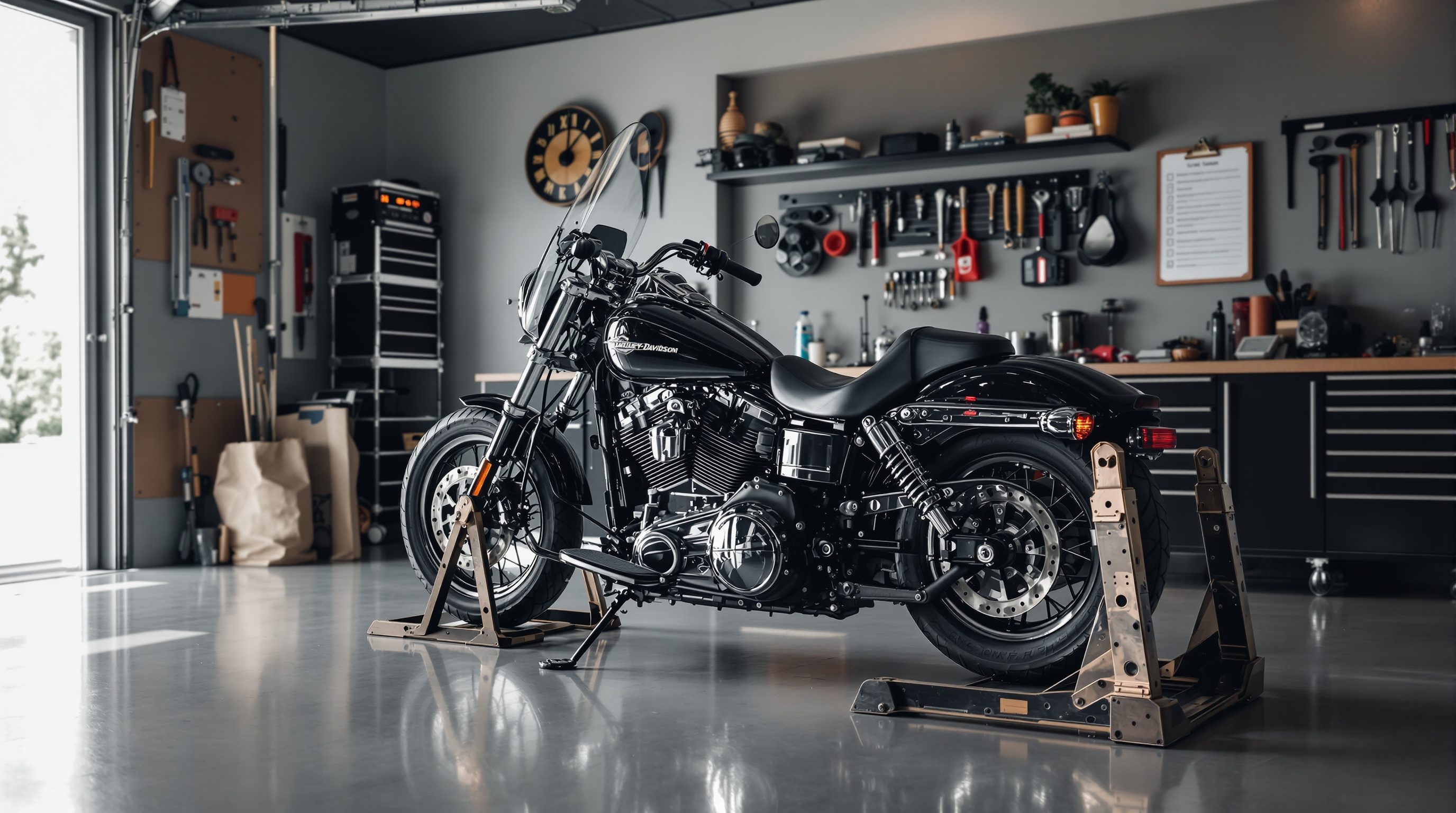
Spring Pre-Season Checklist: Getting Your Bike and Yourself Ready for the Gulf Coast
We do not really park the bike down here, but the cold snaps, damp mornings, and salt air of a Panhandle winter still take a toll. By late February the light is coming back, the humidity has not turned brutal yet, and Perdido Key, the Scenic Highway, and the coastal run to Navarre are calling. Before you chase that first perfect spring day, give the bike and yourself a real once-over. Winter storage, even short and mild, means soft tires, a tired battery, and fluids that have not moved in weeks. Ten minutes in the garage now beats discovering a problem at 55 mph on US-98. Here is a rider's pre-season pass, built around the classic T-CLOCS walkaround.
Start With the Bike: A T-CLOCS Walkaround
T-CLOCS is the inspection checklist riders borrow from the MSF, and it covers the systems that strand you or put you down. Work through it slowly the first ride out of winter, not in the parking lot with the engine running and your gloves already on.
- ✓ Tires and wheels.. Check pressure cold, look for cracks and flat spots from sitting, and eyeball tread and the wheels for dents or loose spokes. Cold, humid storage quietly drops your pressure.
- ✓ Controls.. Work the throttle, clutch, and brake levers through full travel, check cables and the throttle for smooth snap-back, and look for cracked or leaking lines.
- ✓ Lights and electrics.. Headlight high and low, brake light, turn signals, horn, and the battery, which is the number one thing that dies over a Gulf Coast winter.
- ✓ Oil and fluids.. Check engine oil, brake and clutch fluid, and coolant, and look under the bike for anything that dripped while it sat.
- ✓ Chassis.. Look over the frame, suspension, chain or belt tension and lube, and the fasteners, because vibration and time loosen things.
- ✓ Stands.. Make sure the side and center stand spring back and hold, since a tired spring drops a bike in a parking lot fast.
Then Check Yourself and Your Gear
The bike is only half of it. Your skills get rusty over a slow winter too, so ease back in. Take the first few rides on familiar roads before you tackle a group run or a busy beach weekend, and rebuild your habits of scanning intersections and covering the brakes. Go over your gear while you are at it. Look for cracked helmet shells and worn straps, check that armor still sits where it should in your jacket and pants, and replace gloves and boots that went stiff or cracked over the winter. Salt air is hard on zippers, buckles, and leather, so a little cleaning and conditioning now pays off all season.
Do a Two-Minute Coverage Check Before the Beach Runs
Here is the part most riders skip, and the one that matters most if a spring ride goes wrong. Pull up your motorcycle policy and actually read it before the season gets busy. The single most important line for a Florida rider is uninsured and underinsured motorist coverage, because Florida does not require ordinary drivers to carry any bodily injury liability at all, and the driver who pulls out on you at Perdido Key may have nothing. Confirm you carry UM/UIM and that the limits are real, not the bare minimum. Remember too that Florida's no-fault PIP does not cover motorcycles, so your health insurance and any MedPay are your front line for your own medical bills. And if you ride without a helmet, know that the law only allows it for riders 21 and up who carry at least 10,000 dollars in medical benefits coverage. Two minutes now is a lot cheaper than finding the gap after a crash.

Dana Brooks and the Pensacola motorcycle accident attorneys at Fasig Brooks represent riders hurt by negligent drivers. If you have questions after a crash, their team is here to help.