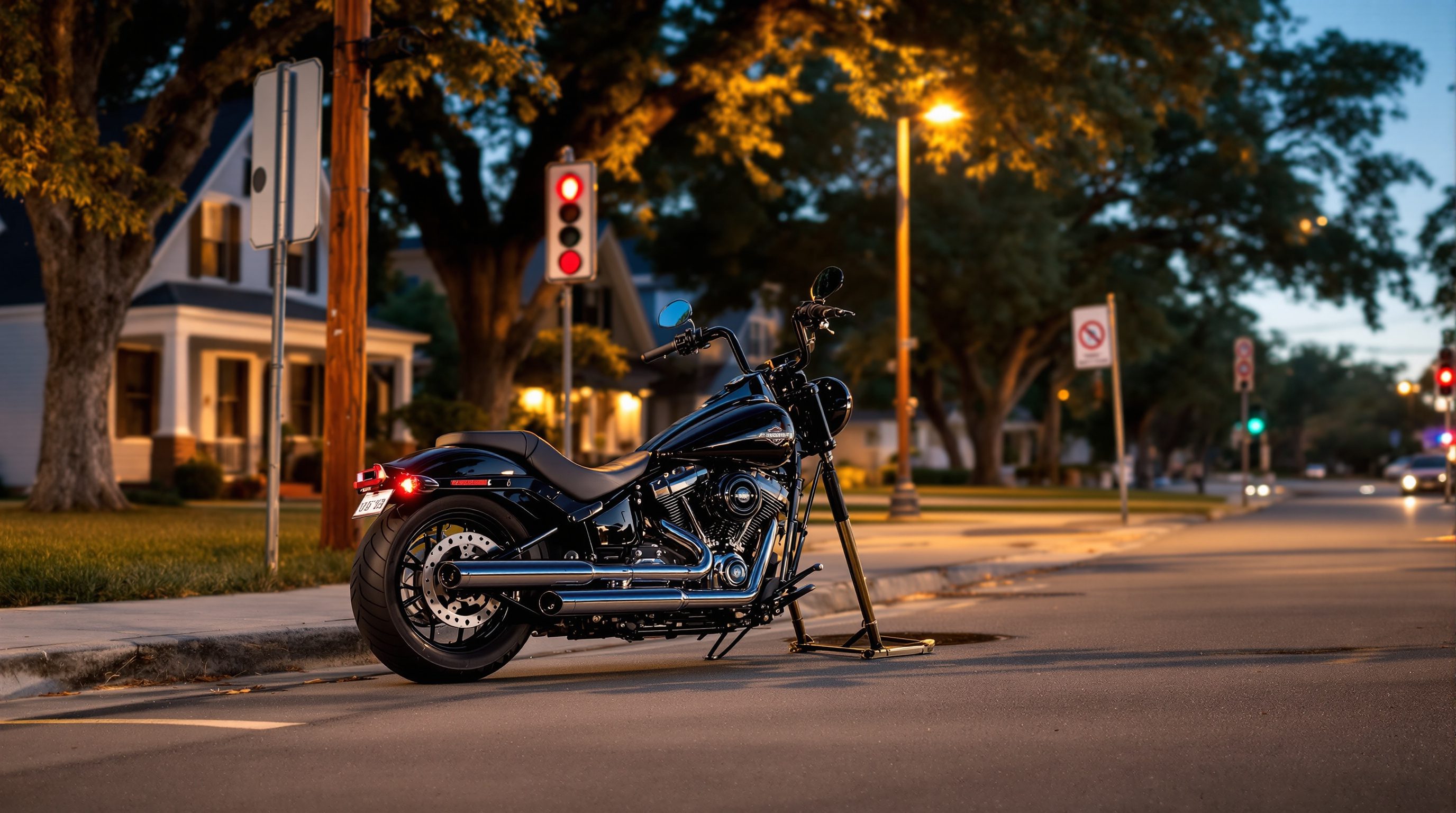
\"I Didn't See the Motorcycle\": Left-Turn Crashes at Pensacola Intersections
It is the crash every Panhandle rider fears and almost every rider has nearly had. You are running straight through a green on Davis Highway or Nine Mile Road, and a car coming the other way turns left across your path. The driver never saw you, or looked right through you, and now you are down in the intersection. Then comes the line every one of them says: "I didn't see the motorcycle." Here is what that driver does not know. In almost every one of these wrecks, the law puts the duty on them, not on you. But the insurer is going to spend the whole claim trying to flip that, so you need to understand why the turning driver owes the duty, how the fault-shifting game works, and what evidence actually wins it.
The Turning Driver Almost Always Owes the Duty to Yield
Florida law is clear about who has to wait. A driver turning left must yield to oncoming traffic that is close enough to be a hazard (Florida Statutes 316.122). You riding straight through with the right of way are that oncoming traffic. The motorcycle's smaller profile does not change the rule. A driver is required to look for and yield to everything coming at them, bikes included, and "I didn't see it" is an admission of failing to look, not an excuse. That is why these left-turn cases start out strong for the rider. The physical setup at the intersection, the point of impact, and the vehicle damage usually tell the same story: a car cut across a rider who had the legal right to be exactly where they were.
Why the Insurer Still Tries to Blame the Rider
A strong starting position is not a finished case. Florida runs on modified comparative negligence with a 51 percent bar, so if the insurer can push more than 50 percent of the fault onto you, your recovery drops to zero. Every point they shave onto the rider saves them money, so they go looking for it. Expect three moves. Speed, because if they can argue you were going too fast to be avoided, they shift blame off their driver. Lane position, because they will claim you were where they could not expect you. And conspicuity, the fancy word for "hard to see," where they blame your dark gear, your headlight, or the time of day rather than their driver's failure to look. None of these excuse a driver from yielding, but each one is a lever on that fault percentage.
The Evidence That Wins a Left-Turn Case
Left-turn cases are won on documentation, and most of the best evidence disappears fast. The goal is to lock down proof that you had the right of way and were riding reasonably, before memories fade and video gets overwritten.
- ✓ Intersection and traffic-camera video.. Nearby businesses, doorbell cameras, and signal cameras may have captured the turn, but footage is often erased within days.
- ✓ Your helmet or bike camera.. If you run a camera, preserve the full file immediately and do not edit or trim it.
- ✓ The crash report and witness names.. Independent witnesses who saw the car turn across you are powerful, so get names and numbers at the scene.
- ✓ Skid marks, debris, and final rest positions.. Photograph the whole intersection, because the physical evidence reconstructs speed and point of impact.
- ✓ Your gear and headlight.. Keep the gear and note your headlight was on, which undercuts the conspicuity argument before it starts.
Protect Yourself Before and After the Turn
You cannot control the driver who turns, but you can ride to survive the intersection and protect the claim if it happens anyway. Cover your brakes and scan for turning wheels every time you approach a green, because a car's front tire starts to move before the driver commits. Position yourself where an oncoming driver is most likely to see you, run your lights, and never assume eye contact means you were seen. If you do go down, get medical care right away, say nothing to the other insurer about speed or fault, and remember that Florida gives you just two years to file. Because motorcycles are excluded from no-fault PIP, your health insurance and UM/UIM coverage carry the early bills, so the sooner the claim is documented, the better it holds.

Dana Brooks and the motorcycle accident lawyers in Pensacola at Fasig Brooks represent riders hurt by negligent drivers. If you have questions after a crash, their team is here to help.