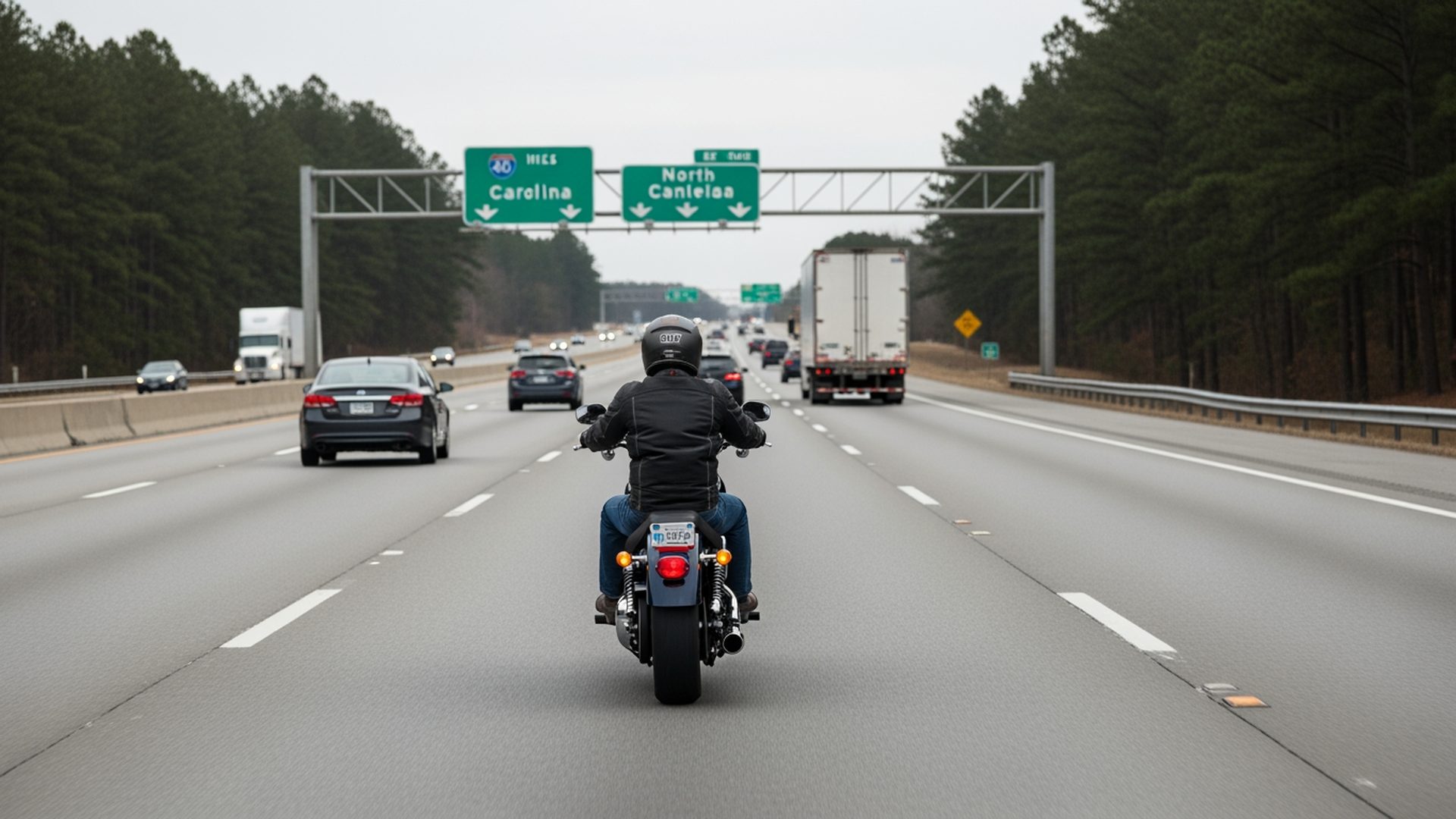
The Most Dangerous Roads for Raleigh Motorcyclists, and How to Ride Them
Every Triangle rider has a road they respect and a road they dread. Some of that is reputation and some of it is hard-earned. The truth is that a handful of corridors around Raleigh concentrate the kind of traffic, speed, and driver behavior that turns a routine ride into a crash. This is not about naming a road so you avoid it forever, most of these you cannot avoid, they are how you get around the Triangle. It is about knowing which ones demand your full attention and exactly what makes each one dangerous, so you can stack the deck in your favor before you ever throw a leg over the bike.
I-40 through the Triangle and the I-440 interchange
I-40 is the backbone of the whole region, and the stretch that ties Raleigh to Durham, Cary, and RTP carries some of the heaviest, fastest traffic in the state. The danger is not any single curve, it is the volume and the merging. Interstate speeds leave almost no margin for the lane change a driver makes without looking, and the interchange where I-40 meets I-440 is a knot of merges, lane drops, and drivers cutting across two lanes at the last second to make an exit. Add long-haul trucks that throw wind blasts and carry blind spots big enough to swallow a motorcycle, and you have the recipe for the crashes riders fear most.
Ride it with distance as your friend. Stay out of truck blind spots, keep your following distance long, and do not linger alongside a big rig where the driver cannot see you and the wind can shove you around. Position yourself early for your exit so you are never the one diving across lanes at the interchange, and watch your mirror as hard as the road ahead, because the rear-end at the back of a sudden slowdown is one of the worst hits a rider can take.
The I-440 Beltline
The Beltline loops the city and never really rests. It is a stop-and-go artery one minute and a 65-plus sprint the next, with closely spaced on-ramps and off-ramps that keep traffic constantly weaving. That merge churn is the risk. Drivers entering and exiting the Beltline change lanes fast and often, checking a mirror for a car-sized gap and missing a motorcycle entirely. The short merge zones give everyone less time to sort it out.
- ✓ Ride out of the blind-spot pockets. On a corridor this busy, the lane change into a rider nobody saw is the most common crash. If you cannot see a driver's mirrors, assume they cannot see you.
- ✓ Leave real following distance. A car cutting into the gap in front of you should not put you into its bumper. Space is what buys you time.
- ✓ Expect the last-second merge. Near every on-ramp and off-ramp, plan for a driver to cross into your lane late and cover your brakes.
- ✓ Watch the back of a slowdown. When traffic stacks up, check your mirror early so you are not the last one to react.
Capital Boulevard and US-1
Capital Boulevard is the classic Raleigh danger road for a reason. It is a wide, high-speed commercial arterial lined with shopping entrances, curb cuts, and left-turn lanes, one after another, and each of those is a spot where a car can cross your path. The signature crash here is the left-turn collision, where an oncoming driver turns across your lane because they misjudged your speed or never registered a single headlight. Left-turn crashes are the number one killer of motorcyclists nationwide, and a corridor like Capital, or US-1 as it runs north, gives a turning driver a fresh chance to make that mistake every few hundred feet.
Ride these arterials expecting the turn. Cover your brakes near intersections, watch the front wheels of any car waiting to turn, because the wheels move before the car does, and set a lane position where a turning driver has the best chance of seeing you coming. Buy yourself an escape path at every light, and never assume a driver looking right at you has actually seen you.
US-64 and the fast suburban connectors
US-64 and the other high-speed connectors that fan out from the Triangle toward the surrounding counties blend the worst of two worlds. They carry near-highway speeds but keep intersections, driveways, and turn lanes at grade, so you get freeway velocity with surface-street conflict points. Drivers treat them like an interstate right up until someone slows to turn off, and the closing speed on a rider who did not expect that stop is brutal. The mix of local drivers who know the road cold and out-of-town drivers who do not adds another layer of unpredictability.
On these roads, keep your speed matched to the sightlines, not the flow. Read the driveways and turn lanes ahead, treat any slowing vehicle as a driver about to do something you did not plan for, and give yourself room to brake in a straight line before you reach it.
What North Carolina law means when one of these roads bites
You can ride every one of these corridors perfectly and still get hit by a driver who was not paying attention. When that happens, North Carolina law shapes what comes next, and the rules here are harsher than in almost any other state. North Carolina follows pure contributory negligence. If you are found even one percent at fault for the crash, you can be barred from recovering anything at all. That is why the insurance company will work so hard to pin a sliver of blame on the rider, and why the details of how the crash actually happened matter so much.
- ✓ Pure contributory negligence. One percent of fault can end your claim, so documentation and a hard fight over fault are everything.
- ✓ Universal helmet law. Every rider and passenger in North Carolina must wear a DOT-approved helmet, with no exceptions.
- ✓ Minimum liability is 30/60/25. Often not enough for a serious injury, which is why the UM/UIM coverage required in the state is a rider's real backstop.
- ✓ Three years to file. The statute of limitations on a North Carolina injury claim is generally three years, and the clock does not wait.
Ben Cochran and the Raleigh-Durham motorcycle accident attorneys at Hardison & Cochran represent riders hurt by negligent drivers. If you have questions after a crash, their team is here to help.