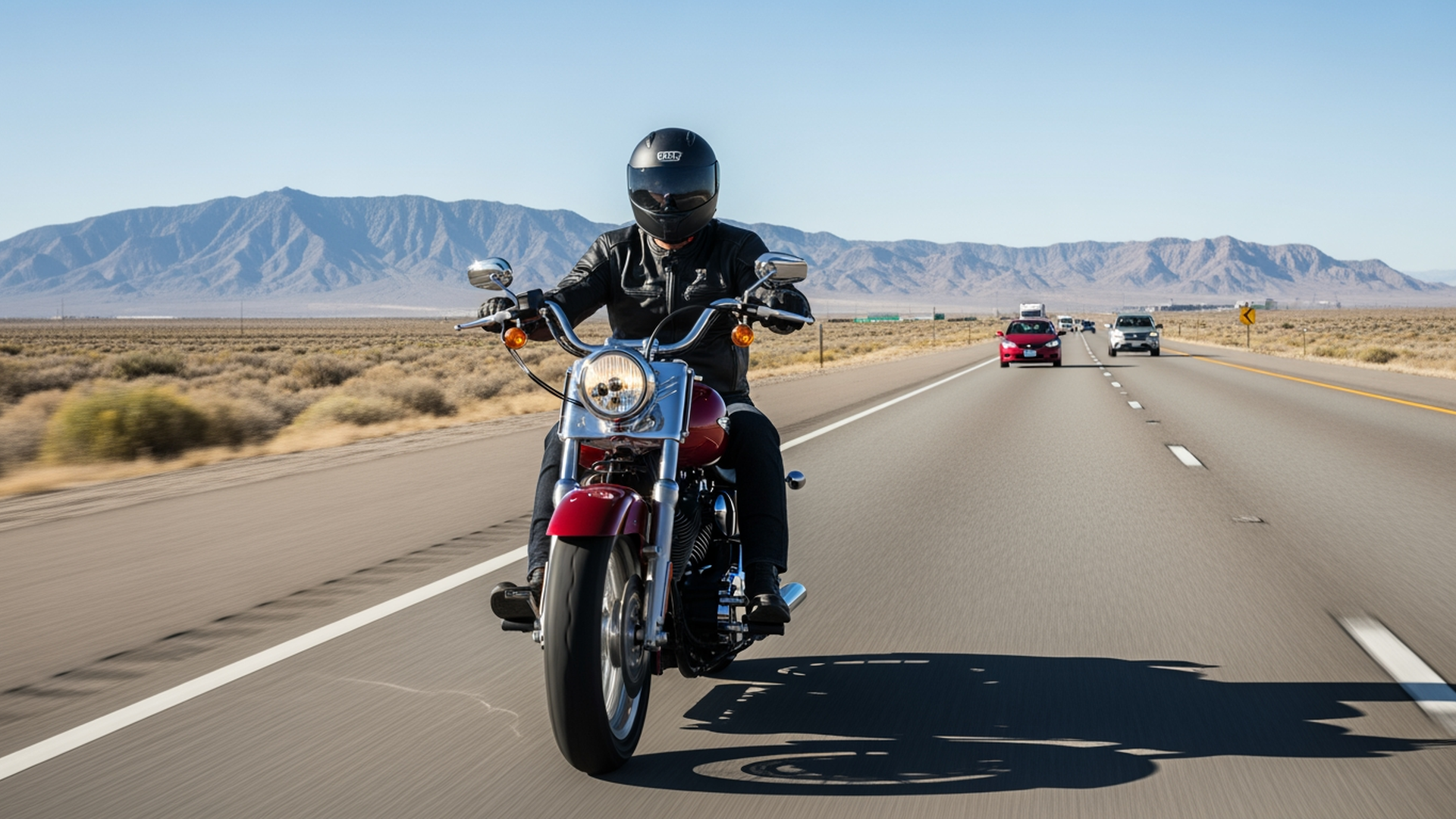
Nevada's Universal Helmet Law: What DOT Compliant Really Means for Las Vegas Riders
Nevada is one of the states that still requires a helmet for every rider, every time. There is no age exemption, no experience exemption, and no way to sign the requirement away. What a lot of Las Vegas riders do not realize is that the law does not just say wear a helmet. It says wear a specific kind of helmet, and the difference matters far more than most people think, both for your skull and for your claim.
What Nevada's Helmet Law Actually Requires
Nevada is a universal helmet state. Under state law, every person operating or riding on a motorcycle must wear a protective helmet, and the helmet has to meet the standards set by the Department of Transportation. There is no carve-out for riders over a certain age, no exemption for the Strip or the Beltway, and no waiver you can sign to opt out the way you can in some neighboring states. If you are on two wheels on a Nevada road, from Boulder Highway to SR-160 out toward Pahrump, the helmet is not optional. Your passenger is covered by the same rule, which means the person on the back of your bike needs a compliant helmet too.
What "DOT Compliant" Really Means
Here is where riders get tripped up. A helmet is not legal just because it sits on your head or has a DOT sticker slapped on the back. The federal standard the law points to is FMVSS 218, and it sets real, testable requirements for impact absorption, penetration resistance, the retention strap, and coverage. A genuine DOT helmet is built and tested to survive a crash. A novelty helmet, sometimes called a beanie or a shorty, is built to look the part and nothing more. Many of them carry fake DOT stickers you can buy separately, which is exactly the problem.
- ✓ It meets FMVSS 218. The helmet is manufactured and tested to the federal safety standard, not just decorated to look like it.
- ✓ It has real weight and thickness. A compliant helmet has a genuine energy-absorbing liner, usually at least an inch of firm foam, not a thin shell over comfort padding.
- ✓ It has a sturdy chin strap with solid rivets. Novelty lids often use flimsy straps and hardware that would not hold in an impact.
- ✓ The DOT label is permanent and specific. A real one is affixed by the manufacturer and lists the maker and model, not a peel-and-stick sticker anyone can add.
- ✓ It is not marketed as a novelty. If the seller calls it a novelty helmet or says it is not for street use, it does not meet the law, no matter what sticker is on it.
How a Novelty Helmet Becomes a Fault Argument
This is the part that catches injured riders off guard. Nevada follows modified comparative negligence with a 51 percent bar, which means your recovery is reduced by your share of fault, and if you are found more than 50 percent at fault, you recover nothing at all. Insurers know that, and they look for anything that pushes your number toward that line. A helmet that did not meet the DOT standard is a gift to them. Even when the other driver clearly caused the crash, the adjuster will argue that a non-compliant helmet made your head injury worse than it should have been, and that some share of your damages is therefore your own fault. It is the same fault-shifting playbook they run on speed, lane position, and loud pipes, just aimed at your gear. Wearing a legitimate FMVSS 218 helmet takes that argument off the table before it starts, and it is a far cheaper fix to make in the store than in a claim.
The Point Is Your Head, and Your Claim Follows
The helmet law exists because a real helmet saves lives on the open desert highways and in stop-and-go traffic alike. But there is a second reason to take it seriously that most riders never consider. In a state where a single fault percentage can erase a claim, the gear you choose becomes evidence. A compliant helmet protects your skull first and your recovery second. If you have already gone down and an insurer is now pointing at your helmet to shrink what they owe, do not accept that framing on your own. Have someone who works these claims read the whole picture and push back on blame that does not belong to you.
Led by Eric Blank, Eric Blank Injury Attorneys in Las Vegas fights for injured motorcyclists. Reach out to their Las Vegas motorcycle accident attorneys anytime you need real answers.