Motorcycle Hit and Run in Las Vegas: How to Protect Your Claim When the Driver Flees
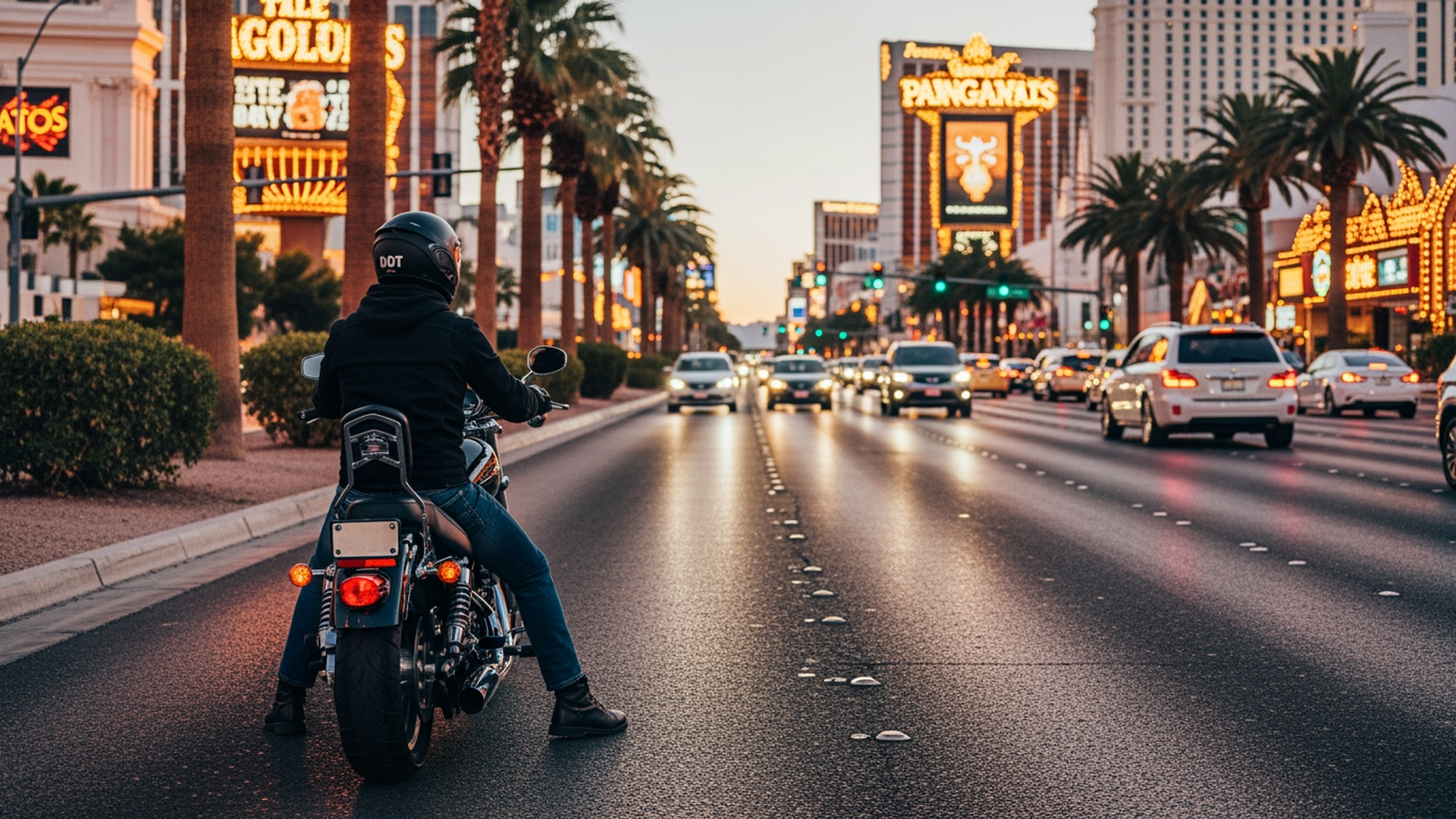
One second a car is next to you on Las Vegas Boulevard, the next it clips your bike and keeps going, taillights swallowed by the traffic. A hit and run leaves a rider hurt on the pavement with no license plate, no insurance information, and a sinking feeling that nobody is going to pay for this. That feeling is wrong. What you do in the next hour, and the cameras that blanket this city, can still turn a fleeing driver into a paid claim.
What to Do in the First Minutes
A hit and run is chaos, and the instinct to chase the car is a bad one. Your job is to get safe, get help, and start capturing evidence while it still exists. Every detail you lock down now is a detail investigators do not have to reconstruct later.
- ✓ Call 911 right away. A hit and run is a crime in Nevada, and an official police report is what makes your uninsured motorist claim work. Report it immediately, not the next day.
- ✓ Get any detail about the fleeing vehicle. Partial plate, color, make, model, dents, direction of travel, even a description of the driver. A partial plate alone has cracked plenty of these cases.
- ✓ Get checked by medics the same day. Adrenaline and anger mask serious injuries. Same-day treatment protects your health and ties your injuries to the crash.
- ✓ Find witnesses before they scatter. On the Strip and Boulder Highway you are surrounded by people who may have seen the plate or filmed it. Get names and numbers before any tourist heads to the airport.
How Nevada Treats a Hit and Run
Leaving the scene of a crash that caused injury is a serious crime in Nevada, and the police take it seriously when it is reported fast and documented well. For your injury claim, the key point is this: Nevada treats a hit and run the same as a collision with an uninsured driver. You do not have to identify the person who hit you to recover. That is exactly what uninsured motorist coverage on your own policy is built for, and it is why reporting the crash promptly and to the police matters so much, because insurers require that report before they will honor a UM hit-and-run claim.
Uninsured Motorist Coverage Pays When the Driver Is Gone
If you carried UM coverage, a fleeing driver does not leave you empty-handed. Your own policy steps into the shoes of the driver who ran, and it pays your medical bills, lost wages, and pain and suffering up to your limits. In many Nevada situations those limits can be stacked across covered vehicles to increase what is available. Pull your declarations page and find the UM line, because that number is the ceiling on your recovery. The catch is the same one that surprises riders on every uninsured claim: the moment you file, your own insurer becomes the party that has to pay, and it will act like it. Expect a recorded-statement request, a fast low offer, and a broad medical release. Say nothing that admits fault, do not sign the blanket release, and do not accept the first number before your injuries are fully known.
The Cameras That Can Find a Fleeing Driver
Las Vegas may be the hardest city in the country for a driver to truly disappear. This valley is wall-to-wall cameras, and the footage that can identify a plate is often out there for a short window before it is gone. Moving fast to preserve it is the single biggest thing that turns an unknown driver into a named one.
- ✓ Casino and resort security cameras. The Strip and the resort corridor are blanketed with high-quality cameras pointed at the street. That footage is often overwritten within days, so it has to be requested quickly.
- ✓ Traffic cameras on the Beltway and freeways. The I-215 Beltway, I-15, and US-95 carry traffic monitoring that can show a fleeing vehicle's route and timing.
- ✓ Business and doorbell cameras. Gas stations, storefronts, and homes along Boulder Highway and side streets capture plates every day without anyone realizing it.
- ✓ Witness phone video. In a city this busy, someone may have filmed the car or its plate. The faster you find them, the better.
Report Fast, Then Get Help Fast
Two clocks are running against you. The first is the evidence itself, since camera footage near the Strip and along the Beltway can be erased within days and witnesses fade. The second is Nevada's deadline: an injured rider generally has two years to file a lawsuit, and your own policy will also impose its own prompt-reporting requirement on a hit-and-run UM claim. Reporting the crash to police immediately protects both clocks. Getting the footage preserved and the claim opened correctly is where an early call to a lawyer earns its keep, because once that camera loops, the driver who ran may be gone for good.
Eric Blank and the Las Vegas motorcycle injury attorneys at Eric Blank Injury Attorneys represent riders hurt by negligent drivers. If you have questions after a crash, their team is here to help.