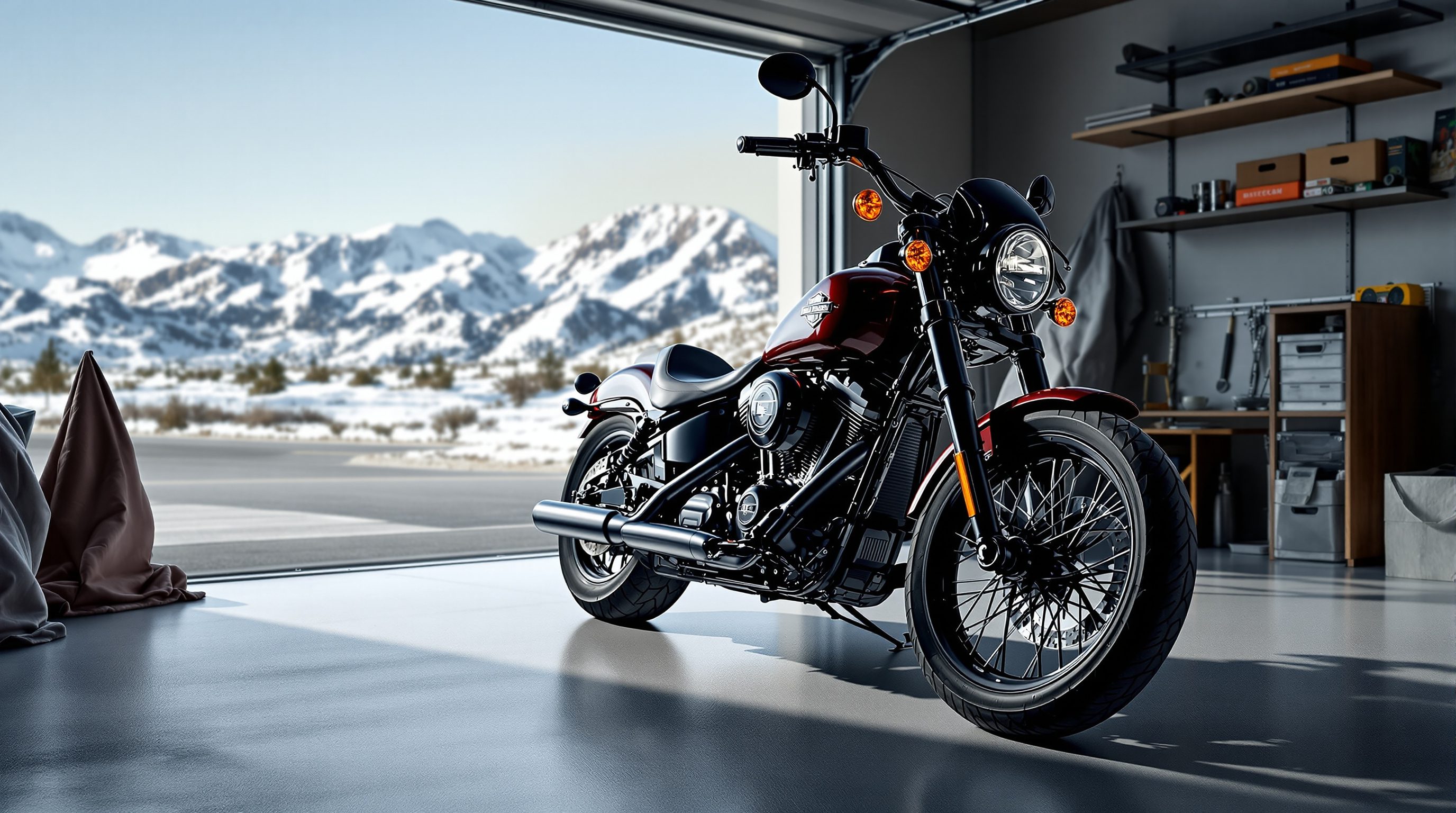
Winter Storage and Your Motorcycle Insurance in Nevada: Should You Drop Coverage?
The Las Vegas valley barely shuts down for winter. Most weeks from December through February you can still get a dry afternoon warm enough to ride, and plenty of Southern Nevada riders never fully park the bike at all. But during the coldest stretch, when the mornings bite and the desert wind turns raw, a lot of riders tuck the motorcycle in the garage and leave it there for a few weeks. That is when the annual question shows up on every forum and in every group chat: if I am not riding, why am I paying to insure it? The honest answer is that cutting the wrong coverage to save a few dollars can cost you far more than you ever saved, and it can quietly leave you exposed the moment you roll back out in spring.
The Vegas Winter Is Shorter Than You Think
Riders in the Northeast park the bike for five solid months and never look at it. Southern Nevada is not that. A cold snap here is a couple of weeks, not a season, and the valley floor rarely stays too cold to ride for long. That matters for your insurance because the whole logic of dropping coverage rests on the bike being truly parked for a long, predictable stretch. If you are the kind of rider who will pull the cover off the first sunny 62 degree Saturday in January, you are not really storing the bike, you are just hoping you remember to turn coverage back on before you ride. That is the gap that gets people hurt and uninsured at the same time. Be honest with yourself about how long the bike will actually sit before you touch a single line on your policy.
What You Can Safely Cut While It Sits
If the bike genuinely will not move for the cold weeks, there are pieces of the policy that do less for you while it is parked in a locked garage. Collision coverage pays for damage from a crash, and a bike on a stand is not going to crash. Liability and medical payments coverage protect you while you are riding, so if the motorcycle truly never leaves the garage, some riders suspend those too. Many insurers offer a formal storage or lay-up option that does exactly this, dropping the on-road coverages while keeping the bike protected against the things that can still happen to it sitting still. The key word is formal. Call your insurer and ask for a storage or suspension endorsement rather than canceling pieces on your own, so the policy stays active and intact underneath.
What You Should Never Drop
Some coverage protects the bike whether you are riding it or not, and cutting it to save a little is where riders get burned. A parked motorcycle faces its own set of risks, and a lapse in the wrong place follows you long after winter ends.
- ✓ Keep comprehensive coverage. Theft, fire, vandalism, flooding, and hail do not care that the bike is parked. Motorcycles are among the easiest vehicles to steal out of a garage or off a trailer, and comprehensive is what pays if yours disappears over the winter.
- ✓ Keep anything your lienholder requires. If you are still making payments, the bank almost always requires full coverage, including collision and comprehensive, for as long as the loan is open. Dropping it can breach your loan agreement and trigger costly force-placed insurance the lender buys on your behalf.
- ✓ Never let the whole policy lapse. Canceling everything looks like the cheapest option and is the most expensive mistake. A gap in coverage marks you as higher risk, and insurers raise your rate when you come back for it in spring.
- ✓ Protect your uninsured and underinsured motorist coverage. UM and UIM coverage is a rider's real backstop in a state full of tourist and uninsured traffic. Let it lapse over the winter and you can create a hole in it that is not easy to rebuild.
- ✓ Suspend, do not cancel. Ask for a lay-up or storage endorsement instead of dropping coverages one by one. It keeps the policy continuous, which is what protects your rate and your record.
The Lapse Trap That Costs You in Spring
Here is the part insurers never volunteer. Continuous coverage is one of the things that keeps your premium down. When you cancel a policy outright and go without insurance for even a few weeks, you show up in their system as a rider who let coverage lapse, and that is treated as risk. When you come back in spring to re-insure the same bike you have ridden for years, you can be quoted a higher rate than you were paying before you saved that handful of winter dollars. The math almost never works in your favor. A storage endorsement keeps the policy alive and continuous at a reduced cost, which is why it beats canceling nearly every time.
Why This Matters the Day You Ride Again
The real danger of a winter coverage gap is not the parked bike, it is the first ride back. Picture rolling out on a warm February morning before you have called your insurer to restore full coverage, and a driver turns left across your lane. Nevada is an at-fault state with no no-fault system and no required personal injury protection, so a hurt rider leans on health insurance, any medical payments coverage, the at-fault driver's policy, and above all their own uninsured and underinsured motorist coverage. If you suspended those on-road coverages for storage and never turned them back on, you are riding exposed. Add Nevada's modified comparative negligence rule, where being found more than 50 percent at fault bars your recovery entirely, and the insurance company on the other side has every reason to pin the blame on you. Restore your full coverage before the first ride, not after, and keep proof of when you did it.
Eric Blank and the Las Vegas motorcycle injury attorneys at Eric Blank Injury Attorneys represent riders hurt by negligent drivers. If you have questions after a crash, their team is here to help.