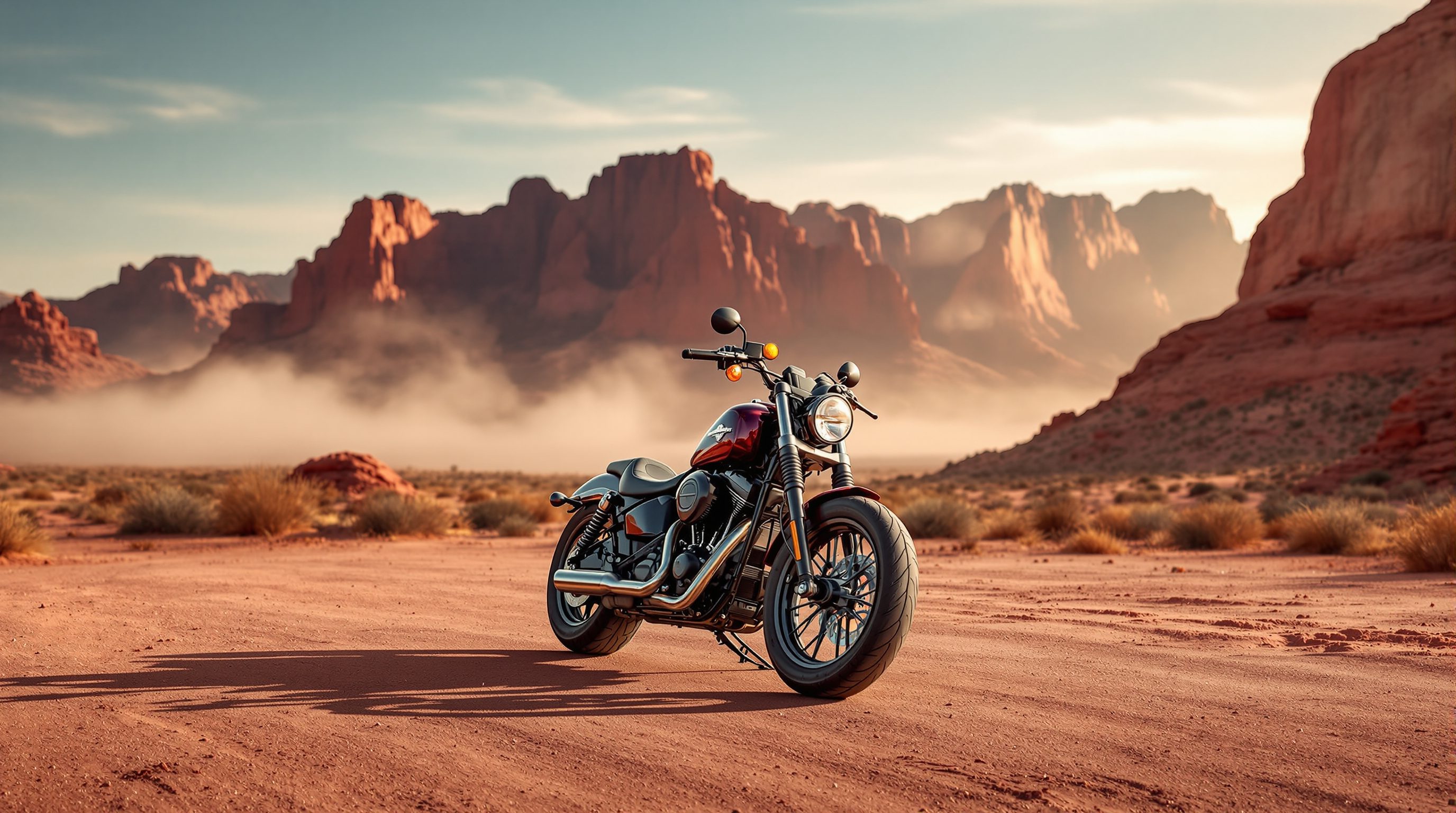
Desert Wind, Blowing Sand, and Road Debris: Southern Nevada Riding Hazards
The open desert around Las Vegas is what draws so many of us to ride here, and it is also what makes the riding deceptively hard. Out on I-15, US-95, and the long empty highways past the valley, the sky is clear and the pavement looks perfect, right up until a wall of crosswind shoves you toward the next lane, a dust cloud swallows the road ahead, or a scatter of gravel washed across a canyon bend takes your front tire out from under you. Wind, sand, and debris are not freak events in Southern Nevada. They are the everyday character of desert riding, and the riders who last out here are the ones who plan for them instead of getting surprised.
Crosswinds on the Open Highways
Nothing tests a rider out here like the crosswind on the open desert highways. On the exposed stretches of I-15 heading toward Mesquite or California, US-95 running northwest, and SR-160 climbing over the mountain to Pahrump, there is nothing to break the wind before it reaches you. A steady gust leans the bike over and pushes you across your lane, and the worst hits come at the gaps, the moment you pass a semi, clear an overpass, or come out from behind a ridge and the wind slams back into you all at once. The instinct to fight it with a stiff, white-knuckle grip is exactly wrong. Loosen your hold, relax your arms, and let the bike move under you while you counter-steer gently and lean into the wind. Drop your speed so a gust has less to work with, keep extra room from traffic and from anything the wind might blow into your path, and stay ready for the lull to vanish as fast as it came.
Blowing Sand and Sudden Dust Storms
Wind in the desert rarely comes alone. It picks up sand and dust and can drop your visibility from miles to almost nothing in seconds. A haboob or a blowing dust event off the open flats can bury the road ahead in a brown wall while you are still riding toward it, and once you are inside it you can lose sight of the lane, the traffic around you, and where the pavement even ends. Sand blown across the surface also steals traction on a road that looked bare a moment earlier. If you see dust building ahead, slow down early and be ready to get off the road entirely. When it closes in, ease off the throttle, avoid hard braking, get as far off the travel lanes as you safely can, and put your lights on so others can see you. Riding blind into a dust wall at highway speed is how chain-reaction pileups start out here, and a motorcycle has no business being caught in the middle of one.
Gravel, Rock, and Flash-Flood Wash
The scenic canyon roads carry a different threat. The Red Rock Canyon Scenic Loop on SR-159, Valley of Fire on SR-169, and the mountain roads are all cut through terrain that sheds rock and sand onto the pavement, and it collects exactly where you least want it, in the corners and on the far side of blind bends. Desert storms make it worse. A short, hard rain sends flash-flood wash across low crossings and dip sections, dragging gravel, mud, and rock over the road and sometimes leaving standing water and debris long after the sky clears. You can round a familiar bend and find a fan of gravel that was not there last week. Ride these roads expecting it. Keep your entry speed down, look through the corner for anything on the surface before you commit to your line, and never assume a canyon road is clean just because it was yesterday.
Sun Glare and the Rest of the Package
The desert throws in one more hazard that stacks on top of the others: brutal, low-angle sun glare. Early and late in the day the sun sits right in the sightline on east-west highways, and a driver squinting into it will not see a motorcycle at all. Blowing dust scatters that light and makes it worse. You cannot fix another driver's blinded eyes, but you can ride like you are invisible into the sun, keep a clean face shield and good sunglasses, and give glare-blinded traffic room. Combine glare, wind, and sand and you have the everyday reality of a desert ride, several hazards working at once rather than one at a time.
The Technique That Keeps You Upright
Handling the desert is less about strength and more about staying loose, smooth, and unsurprised. A handful of habits carry you through wind, sand, and debris without a get-off.
- ✓ Relax your grip in the wind. A tight, locked hold transmits every gust straight into your steering. Loose arms let the bike settle itself while you make small, calm corrections.
- ✓ Slow down before the hazard, not during it. Less speed gives wind less leverage, gives you more time to read blowing sand, and shortens your stop if debris appears in a corner.
- ✓ Get off the road in a dust storm. If visibility collapses, pull well clear of the travel lanes, keep your lights on, and wait it out. No ride is worth riding blind at speed.
- ✓ Scan every corner for debris. Look through canyon bends for gravel, rock, and flood wash before you lean, and set your entry speed so a surprise on the surface does not put you down.
- ✓ Ride for the glare and the gaps. Assume sun-blinded drivers cannot see you, keep your shield clean, and expect the wind to jump every time you clear a truck, an overpass, or a ridge.
When the Hazard Was Someone Else's Fault
Not every desert wreck is just the weather. Cargo and debris that fall off an unsecured load, a driver who drifts into you fighting the same crosswind, or a road-defect problem a public agency failed to clear can all put a rider down, and those are somebody's responsibility. Nevada makes fault the whole game. It is a modified comparative negligence state with a 51 percent bar, so if the insurer can pin more than half the blame on you, arguing you should not have been riding in the wind or the dust, you recover nothing. Nevada is an at-fault, tort state with no required personal injury protection and minimum liability of only 25/50/20, which is thin cover in a serious crash, so your own uninsured and underinsured motorist coverage is your real backstop against the heavy uninsured and tourist traffic out here. You have two years to file an injury claim, and if a road hazard a city, county, or the state should have handled played a part, the notice deadlines against a public agency are shorter, so do not wait to get it looked at.
Eric Blank and the Las Vegas motorcycle accident attorneys at Eric Blank Injury Attorneys represent riders hurt by negligent drivers. If you have questions after a crash, their team is here to help.