Best Motorcycle Rides Near Seattle (and Their Hidden Risks)
Seattle is boxed in by some of the best riding in the country. The Cascades wall off the eastern horizon with a chain of mountain passes, Mount Rainier looms an hour and a half south, and the Olympic Peninsula sits just across the water when you want salt air instead of fir trees. The same roads that make the Puget Sound a rider's paradise also carry risks that catch too many riders off guard, and Washington law adds a wrinkle most people never think about until they are already hurt.
Snoqualmie Pass and the Old Sunset Highway
The quickest escape from Seattle points the bike east on I-90 over Snoqualmie Pass, but the ride worth taking is the old Sunset Highway that shadows it. Peel off onto the original road and you trade freeway drone for tight forest curves, lakes, and the kind of two-lane pavement I-90 buried decades ago. It is the closest real mountain riding to the city. The catch is elevation and weather. The pass climbs high enough that autumn shows up early up top, with cold mornings, sudden fog, and shaded corners that stay damp long after the valley dries out. Gravel and rockfall wash onto the old road, and by late fall the first ice and snow start closing the high sections down. Ride it early in the season and early in the day, because the mountain sets the terms.
Stevens Pass on US-2
For a longer day, run US-2 northeast out of the suburbs and over Stevens Pass. The road climbs the Skykomish River valley past small mountain towns, tops out at the pass, and drops toward Leavenworth on the dry side, one of the best full-day loops the region offers. The riding is fast and flowing, but the mountain demands respect. Elevation brings weather that turns on a dime, tight sections with real consequences, log trucks and slow RVs, and deer and elk that step out at dusk without warning. Stevens is a working winter pass, so it ices and closes as the season turns, and even in early fall the summit can be twenty degrees colder than Everett. Watch the sky before you commit to the far side.
Chinook Pass on SR-410 Around Mount Rainier
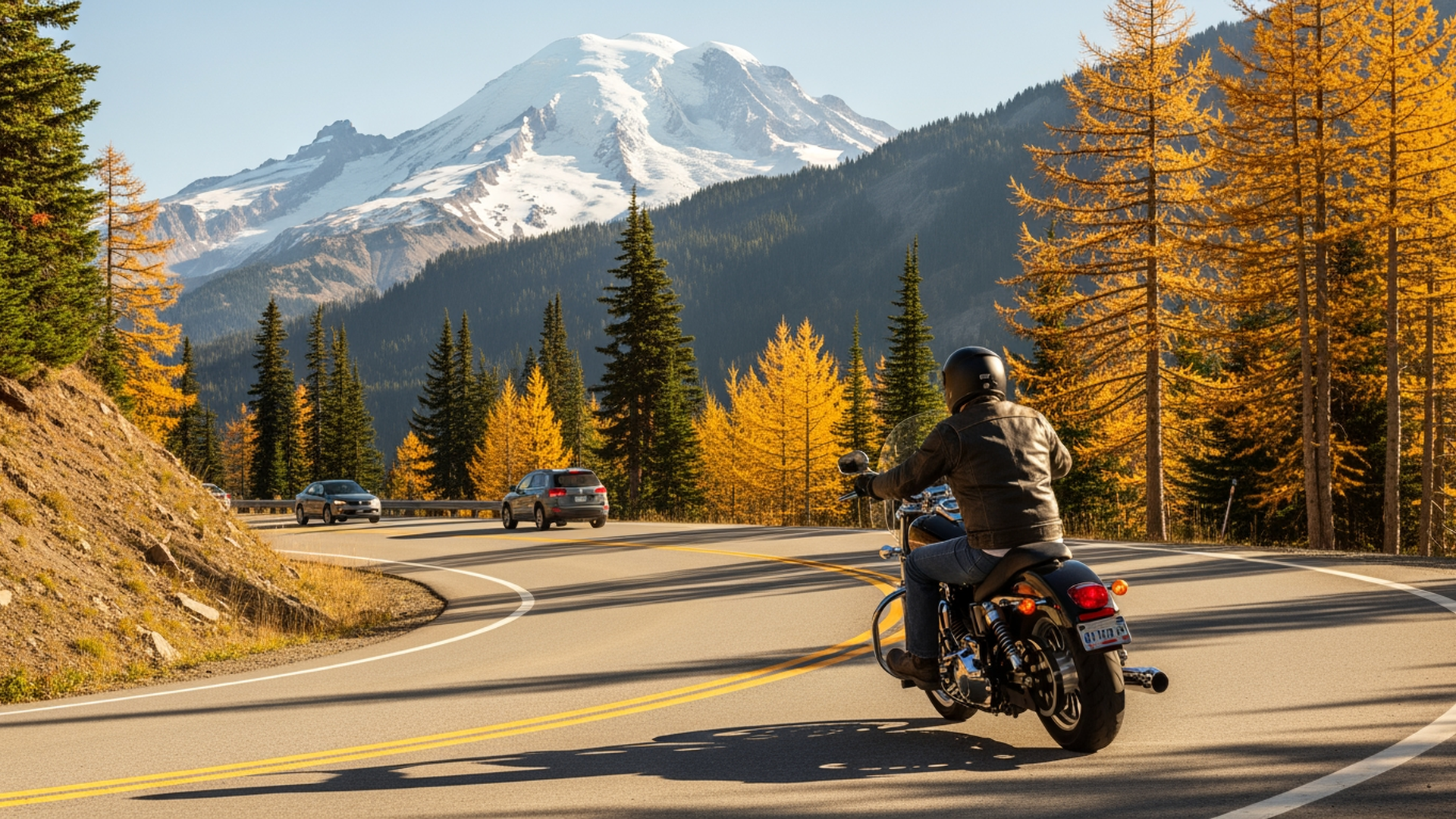
When you want the mountain itself, SR-410 over Chinook Pass is the ride. It sweeps up the northeast side of Mount Rainier, tops out above six thousand feet with the peak filling the windshield, and links into some of the most dramatic alpine riding in the state. On a clear early-fall day it is hard to beat. It is also seasonal in the truest sense. Chinook Pass closes for winter and reopens late, so your window is short, and the high country turns cold, wet, and foggy fast. The switchbacks are tight, the drop-offs are real, and tourists brake hard or drift across the center line staring at the mountain instead of the road. Ride it smooth, and treat every blind corner like someone is stopped just past it.
The North Cascades Highway on SR-20
If you have a full day and a bucket list, SR-20, the North Cascades Highway, is the crown jewel. It cuts through the North Cascades past jagged peaks, glacial-blue reservoirs, and overlooks that stop you cold, then opens into the high country toward Winthrop and the Methow Valley. Riders plan whole trips around it. It is also the most remote riding on this list. Fuel, cell service, and daylight all get scarce, the weather at elevation is its own animal, and rockfall and gravel show up in the corners without warning. The highway closes entirely through winter and does not reopen until spring, so early fall is your last clean shot before the gate drops. Plan the ride, carry what you need, and do not count on help being close.
Chuckanut Drive on SR-11
For scenery without the altitude, SR-11, Chuckanut Drive, hugs the shoreline between Burlington and Bellingham, carving along cliffs above Samish Bay with the San Juan Islands laid out to the west. It is short, gorgeous, and rideable most of the year, a favorite when the passes are already closed. The hazards here are close-quarters ones. The road is narrow and twisting with rock walls on one side and a drop to the water on the other, little runoff room, and constant sightseeing traffic braking for the view or turning into pullouts. Shaded, tree-canopied pavement stays damp and slick, and wet leaves collect right in the curves. Relaxed scenery does not mean relaxed riding.
The Olympic Peninsula Loop on US-101
When you want salt air and big country, catch a ferry across the Sound and loop the Olympic Peninsula on US-101. The highway rings the Olympic Mountains past rainforest, coastline, and Lake Crescent, one of the great multi-day rides in the Northwest. It is also weather country in the extreme. The peninsula catches some of the heaviest rain in the country, so the pavement is wet more often than not, fog rolls in off the ocean fast, and 101 is packed with logging trucks, RVs, and drivers watching the water instead of the road. Cross traffic, driveways, and left-turning cars, not curves, are what take riders down out here. Give yourself daylight and dry-weather margins you can actually use.
The Hidden Risks Every Seattle Ride Shares
No matter which route you pick, riding around Puget Sound comes with a few constants worth planning around. Ride like the road is not looking out for you, because it is not.
- ✓ Rain and wet pavement. The long Puget Sound wet season leaves roads slick for months, and painted lines, streetcar and rail tracks downtown, and grated metal bridge decks over the water turn treacherous the moment they get wet.
- ✓ Mountain passes that close. Snoqualmie, Stevens, Chinook, and the North Cascades all ice up and shut down as winter comes, which is exactly why early fall is prime and late fall gets dangerous fast.
- ✓ Deer and elk. The Cascade passes, US-2, and the peninsula are thick with wildlife, especially at dawn and dusk, and a strike on a bike is a serious crash.
- ✓ The left-turn driver. The most common motorcycle crash is a car turning left across a rider's path, and it happens at Seattle and Tacoma intersections every day.
- ✓ Freeway congestion. Low sun and heavy congestion on I-5, I-90, I-405, and SR-520 leave drivers rushed, distracted, and blind to a bike in the next lane.
Gear, Helmets, and the Washington Rules
A few Washington basics are worth locking in before your next ride, not after a crash. Washington has a universal helmet law: every rider and passenger must wear a DOT-approved helmet, no exceptions and no age cutoff, so the gear question is settled by law. Beyond the helmet, the wet Northwest climate makes a real riding jacket, gloves, and boots more than comfort, they are what stands between you and the pavement when a road that was dry an hour ago is slick again. Slow down for the metal bridge decks and rail tracks, give the wet leaves in the mountain curves a wide margin, and remember that the same passes that reward you in September will try to kill you in November.
Why a Washington Crash Hits Riders Differently
Here is the part most riders never see coming until it is too late. Washington is an at-fault state, not a no-fault state, and PIP is optional coverage you can add or reject rather than something every policy carries. Most riders do not have PIP on the bike, which means after a wreck there is no automatic pot of money covering your own early medical bills, so strong health insurance and solid uninsured and underinsured motorist coverage become a Washington rider's real backstop. The good news is the fault rule. Washington follows pure comparative negligence, so your recovery is reduced by your share of fault but never barred entirely, even a mostly-at-fault rider can still recover something, which is more forgiving than the states that cut you off at 51 percent. That does not stop insurers from fighting hard to shift blame onto the rider, because every percentage point still comes out of your recovery, so how the crash is documented still drives the number. Washington also requires only minimum liability coverage of 25/50/10, which can vanish before a serious crash is paid for, and if you do go down, the state generally gives you three years from the date of the crash to file an injury claim.

Janelle Bailey and the motorcycle accident lawyers in Seattle-Tacoma at Washington Injury Law represent riders hurt by negligent drivers. If you have questions after a crash, their team is here to help.