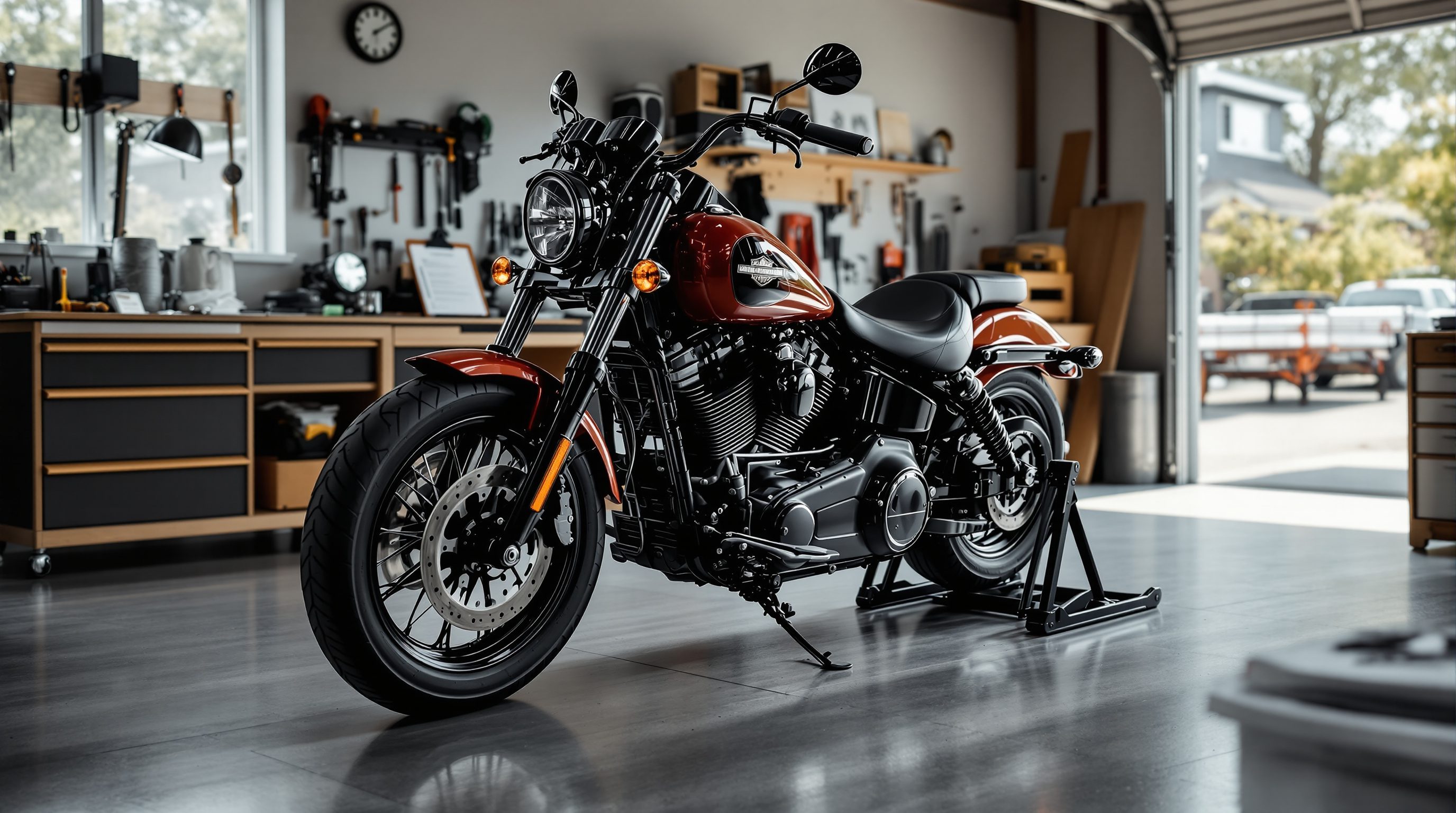
Spring-Ready: The Seattle Rider's Pre-Season Checklist
You know the feeling. A rare dry morning in late February, the first real hint that the long gray Pacific Northwest winter is loosening its grip, and the bike is sitting in the garage where it has been since November. Every part of you wants to fire it up and go. Slow down for one afternoon first, because a machine that sat through months of Puget Sound damp is not the same machine you parked, and neither are your reflexes.
Start With T-CLOCS, Every Time
Experienced riders lean on the T-CLOCS inspection because it is a memory aid that misses nothing: Tires, Controls, Lights, Oil and fluids, Chassis, and Stands. Run it head to tail before the first spring ride, and pay extra attention to anything that sat in one position for months.
- ✓ Tires and wheels. Cold storage leaves flat spots and drops pressure. Check for cracks, uneven wear, and embedded debris, and set pressure to spec.
- ✓ Controls. Work the throttle, clutch, and brake levers through full travel. Cables stiffen when a bike sits in the cold and damp.
- ✓ Lights and electrics. Headlight high and low, brake light, signals, horn. Where drivers already struggle to see riders, every light matters.
- ✓ Oil and fluids. Check engine oil, coolant, and brake fluid. Old fluid absorbs moisture over a wet winter, and brake fluid loses its bite.
- ✓ Chassis, chain, and stands. Inspect frame, suspension, and fasteners, clean and lube the chain and check its tension, and confirm both stands spring back and hold.
Chase Out the Moisture, and Watch the Spring Roads
This is the Northwest, and the enemy is water. Months of damp garage air work into every connector and cavity, so look for the green fuzz of corrosion on battery terminals, ground straps, and electrical connectors, and clean and protect anything that shows it. A battery that sat all winter without a tender is very likely flat, so charge it fully and load-test it before it strands you on the shoulder of I-90. Check the fuel too, because gas that sat since fall can go stale and leave water in the tank. Out on the road, spring leaves its own traps right where you want to open the bike up: moss and algae in shaded corners, traction gravel and sand washed into intersections, potholes from freeze-and-thaw, and slick wet leaves in the tree-lined stretches this region is full of.
Your Skills Got Rusty, and Your Coverage Needs a Look
The bike is not the only thing that sat all winter. Your throttle control, braking timing, and hazard scanning all fade over a months-long layup, so treat the first ride like a warm-up, not a victory lap. Pick a quiet stretch, keep the speed down, rehearse hard braking and slow-speed maneuvers, and ride like you are invisible, because after a gray winter off the road, to a lot of drivers you effectively are. Then handle the step that has nothing to do with a wrench. Pull out your policy and actually read it, paying special attention to uninsured and underinsured motorist coverage. Washington is an at-fault state that does not require personal injury protection, so PIP is optional and many riders rely on health insurance and their own UM and UIM. Insurers must offer you UM and UIM, and it is a rider's real backstop against the drivers carrying only the state minimum of 25/50/10 or nothing at all. Do it now, so when the North Cascades Highway on SR-20 reopens and Chinook Pass on SR-410 clears, and the runs up Snoqualmie and over Stevens Pass on US-2 start calling, your coverage is sorted rather than a project for after a crash.

Janelle Bailey and the Seattle-Tacoma motorcycle accident attorneys at Washington Injury Law represent riders hurt by negligent drivers. If you have questions after a crash, their team is here to help.