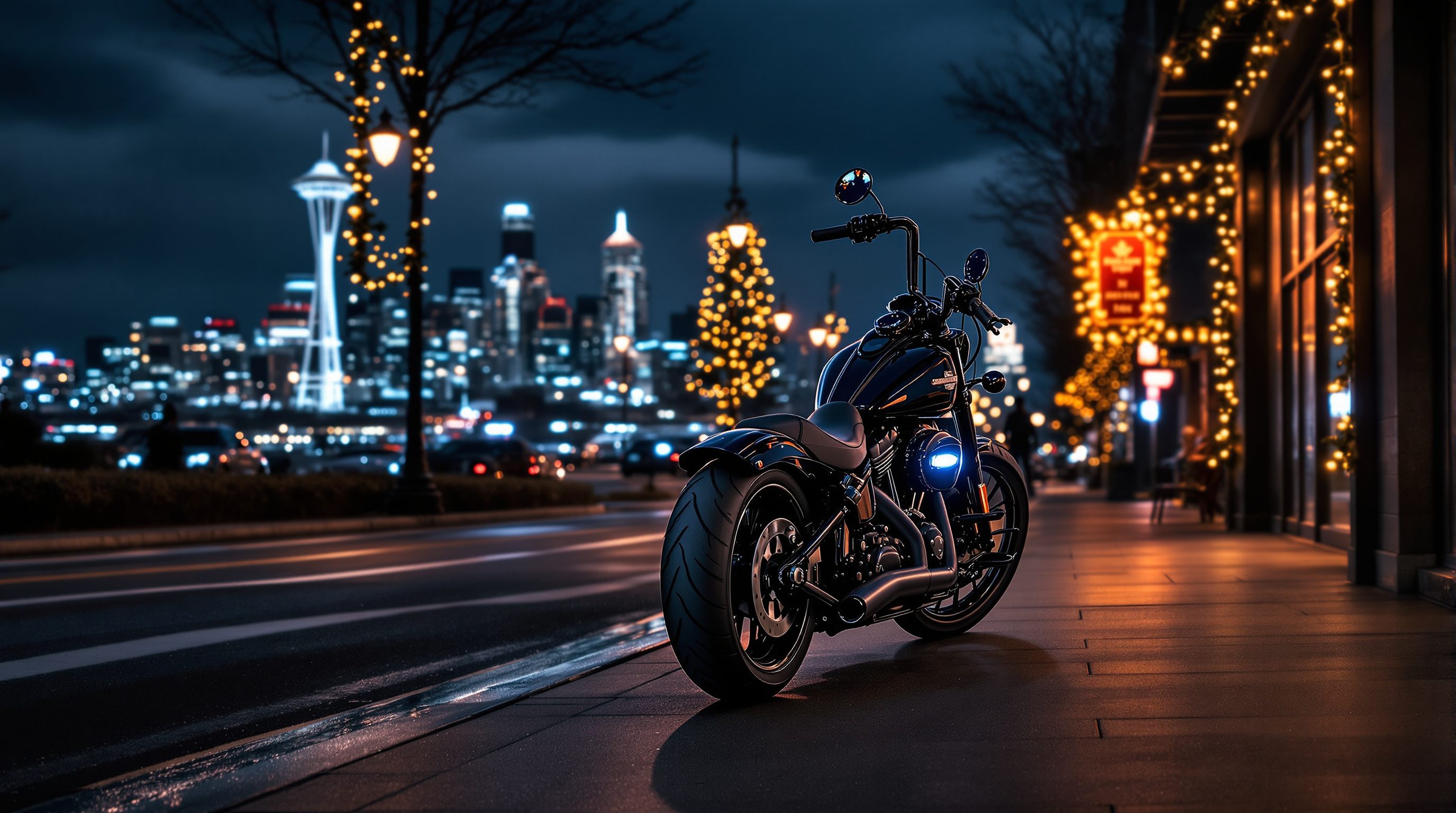
Holiday DUI Season in Seattle: When a Drunk Driver Hits a Rider
December across the Seattle-Tacoma metro means dark by mid-afternoon, rain on every surface, and packed bars from Capitol Hill to downtown Tacoma. It is also the worst stretch of the year to share the road with a drunk driver. Holiday parties and people who skip the last cab pour back onto I-5, I-405, and the Aurora corridor on SR-99 after last call. If one of them runs you down on your bike, that crash is not your bad luck. It is their crime, and Washington law hands you real leverage because of it.
A Drunk Driver's Fault Is Your Strongest Asset
Washington runs on pure comparative negligence. Your recovery is reduced by your share of fault, but it is never barred entirely, which is more rider-friendly than the 51 percent-bar states where crossing a line wipes out the whole claim. That rule already helps riders, because adjusters love to pin blame on the person on two wheels. A DUI stacks the deck further in your favor. When the other driver blew over Washington's 0.08 limit, their impairment is documented in a breath test, a field sobriety result, and often a criminal charge. That is hard evidence you were not the careless one, and it makes it very tough for their insurer to shove a big fault percentage onto you.
Watch the Traps That Still Cost Riders
A clean DUI does not mean the insurance company rolls over. Because Washington reduces your recovery by your share of fault, the insurer still fights to run that share up.
- ✓ Speed. They will imply you were riding too fast on I-5 or the 405, wet pavement or not, whether there is proof or none at all.
- ✓ Visibility. They argue a sober rider should have seen the drunk driver drifting and gotten out of the way.
- ✓ Weather. December rain and early dark become an excuse to say the crash was partly on you for riding at all.
- ✓ Recorded statements. A friendly call that quietly turns your own words into an admission weeks later.
Washington Dram Shop Liability
The drunk driver is not always the only one who pays. Washington recognizes dram shop liability, which means a bar, restaurant, or venue that over-served a person who was already apparently intoxicated, or served a minor, can share responsibility for the harm that person then causes on the road. In a metro built on nightlife, that matters. If the driver who hit you got loaded at a bar in Belltown, Ballard, or downtown Tacoma that kept pouring long after they were visibly drunk, that business may carry its own liability and its own insurance policy. That can be the difference between a claim capped at a driver's thin coverage and one that actually covers what you lost.
When the DUI Driver Has No Coverage or Flees
Plenty of drivers on Puget Sound roads carry only Washington's minimum 25/50/10 liability, and some carry nothing at all. Some hit you and run rather than face a DUI arrest on a rainy night. This is where your own policy earns its keep. Washington is an at-fault state and does not require personal injury protection, so PIP is optional and many riders rely on health insurance and their own uninsured and underinsured motorist coverage. UM and UIM must be offered to you, and it is a rider's real backstop against the uninsured, out-of-state, and hit-and-run drivers who flood the metro at the holidays. If the drunk driver has too little insurance or disappears entirely, your UM and UIM coverage can step in and pay when their policy cannot.
Do Not Let the Criminal Case Run Your Clock
The driver may face a criminal DUI charge, but that case is separate from your injury claim and it does not pay your medical bills. Your civil claim has its own deadline: Washington generally gives you three years from the date of the crash to file. Do not wait for the criminal case to wrap up before protecting your own rights. Evidence like the bar's service records, surveillance video, and the driver's insurance details can vanish fast over a busy holiday stretch, and the sooner someone starts preserving it, the stronger your claim.

Janelle Bailey and the Seattle-Tacoma motorcycle injury attorneys at Washington Injury Law represent riders hurt by negligent drivers. If you have questions after a crash, their team is here to help.